Attaque nocturne 1948
Jacques Demy's *Attaque nocturne (1948)* is a fleeting yet fascinating footnote in animation history, born from a director's vivid recollections rather than a traditional filmmaking process.
Director: Jacques Demy
Frequently Asked Questions
What is *Attaque nocturne (1948)* about?
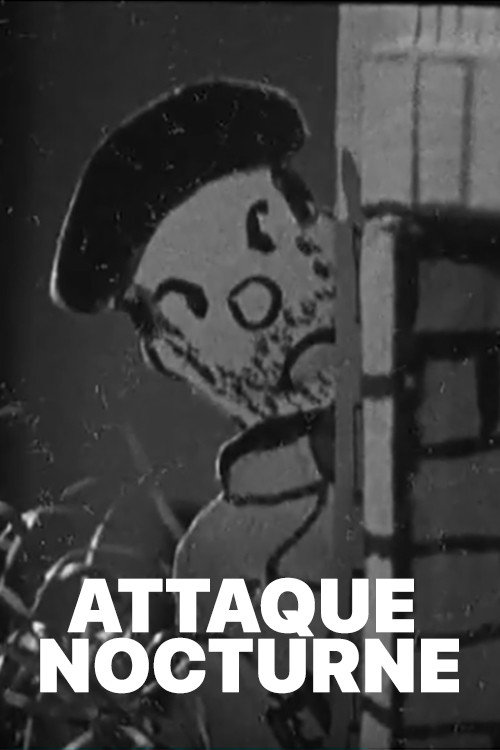
This two-minute animated short was born from director Jacques Demy's memories after the original film was lost, save for two cardboard thief characters. He recreated the setting and figures with a set designer, animating them frame by frame to revive the forgotten story.
Who directed *Attaque nocturne*?
Jacques Demy directed *Attaque nocturne*. The film reflects his early experimentation with animation and storytelling, long before his rise to prominence in the French New Wave.
Who stars in *Attaque nocturne*?
Director information is not available.
Is *Attaque nocturne (1948)* worth watching?
As a 2-minute experimental short, *Attaque nocturne* offers a unique glimpse into Jacques Demy's creative process and early animation techniques. While it lacks the depth of his later works, its nostalgic charm and playful reconstruction make it a fascinating curiosity for animation enthusiasts.
How long is *Attaque nocturne*?
*Attaque nocturne* has a runtime of 2 minutes.
About Attaque nocturne (1948) — Jacques Demy's Lost Animation Reimagined
Jacques Demy's *Attaque nocturne (1948)* is a fleeting yet fascinating footnote in animation history, born from a director's vivid recollections rather than a traditional filmmaking process. The 2-minute short emerged after nearly all physical traces of the original project vanished, leaving only a pair of cardboard cutout thieves lingering in Demy's memory. Collaborating with a set designer, he painstakingly recreated the lost sets and characters, breathing life into them through frame-by-frame animation. Though stripped of its original form, the film endures as a whimsical testament to creativity's resilience, where imagination bridges the gap between absence and existence. Its brevity belies a playful, almost surreal charm, capturing the essence of early experimental animation.
Demy's approach to *Attaque nocturne* reflects his signature blend of nostalgia and innovation, even in a format where every frame counts. The cardboard figures, though simple, carry a tangible sense of motion and personality, hinting at the director's later mastery of visual storytelling. While the film's origins remain shrouded in mystery, its reconstruction offers a rare glimpse into Demy's formative years, long before his breakthroughs in French New Wave cinema. *Attaque nocturne* may be a ghost of a project, but it stands as a poignant reminder that some stories refuse to fade.