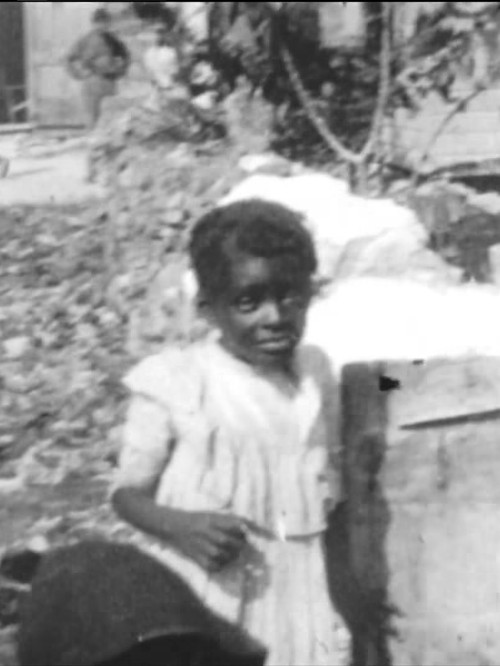
Native Woman Washing a Negro Baby in Nassau, B.I. 1903
One of the earliest surviving films from the Bahamas, *Native Woman Washing a Negro Baby in Nassau, B.I.* (1903) offers a rare glimpse into colonial-era life through a surprisingly intimate lens.
Frequently Asked Questions
What is *Native Woman Washing a Negro Baby in Nassau, B.I.* (1903) about?
This three-minute silent documentary reveals a tender moment as a Black mother bathes her young child in a wooden tub, capturing the child's playful joy before soap irritates his eyes. The scene is set against a backdrop of rural Bahamian life, blending everyday realism with early cinematic experimentation.
Who directed *Native Woman Washing a Negro Baby in Nassau, B.I.*?
Director information is not available.
Who stars in *Native Woman Washing a Negro Baby in Nassau, B.I.*?
The film features an unnamed local mother and her child, with no credited actors from the early silent era.
Is *Native Woman Washing a Negro Baby in Nassau, B.I.* (1903) worth watching?
As a historical curiosity rather than a narrative piece, this film isn't a blockbuster, but it offers a unique window into 1903 Bahamian life. Its charm lies in its authenticity and brevity, perfect for film history enthusiasts or those curious about early cinema's global reach.
How long is *Native Woman Washing a Negro Baby in Nassau, B.I.*?
The film runs for exactly 3 minutes.
About Native Woman Washing a Negro Baby in Nassau, B.I. (1903) — The Earliest Bahamian Film You Can Watch Today
One of the earliest surviving films from the Bahamas, *Native Woman Washing a Negro Baby in Nassau, B.I.* (1903) offers a rare glimpse into colonial-era life through a surprisingly intimate lens. Shot in documentary style, this three-minute silent film captures a Black mother tending to her toddler in a rustic yard, where playful splashing turns to giggles and grimaces as soap stings tiny eyes. The scene unfolds against a backdrop of wooden huts and sandy pathways, evoking the simplicity of early 20th-century Nassau. Though modest in scale, the footage transcends its era by preserving an unfiltered moment of maternal care and childhood mischief, making it a fascinating artifact for historians and casual viewers alike.
Discovered among the first wave of American films exported to the Caribbean, this short documentary reflects the ethnographic curiosity of the time. Its candid portrayal of everyday life contrasts with the staged spectacles dominating early cinema, offering a raw, human snapshot rather than a staged performance. While the title reflects the racialized language of its period, the film's enduring appeal lies in its universal theme of a mother's tenderness—and a toddler's fleeting patience—immortalized on celluloid over a century ago.