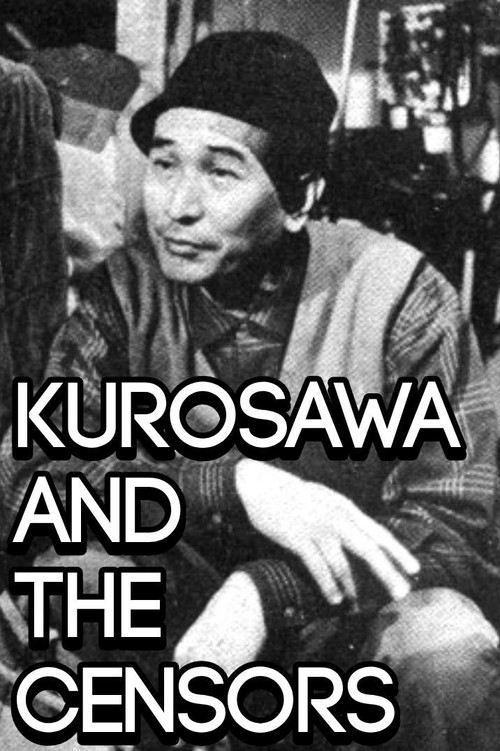
Kurosawa and the Censors 2007
Kurosawa and the Censors (2007) dives into a fascinating yet overlooked chapter of film history, exploring how American occupation forces censored Japanese cinema in the years following World War II.
Director: Lars-Martin Sorenson
Cast
Frequently Asked Questions
What is Kurosawa and the Censors (2007) about?
This 2007 documentary examines how U.S. military censors restricted Japanese films during the post-WWII occupation, focusing on Akira Kurosawa's challenges while creating Drunken Angel (1948). It blends historical analysis with personal insights to reveal censorship's lasting influence on cinema.
Who directed Kurosawa and the Censors?
Kurosawa and the Censors was directed by Lars-Martin Sorensen, a Danish film scholar who specializes in Japanese cinema and censorship.
Who stars in Kurosawa and the Censors?
The documentary features Robert Fischer and Lars-Martin Sorensen in key roles, offering expert commentary on Kurosawa's struggles against censorship.
Is Kurosawa and the Censors (2007) worth watching?
As a documentary, Kurosawa and the Censors offers valuable insights for film history enthusiasts, though its 25-minute runtime may feel brief. Its focus on Kurosawa and censorship makes it a niche but compelling watch for those interested in cinema's intersection with politics.
How long is Kurosawa and the Censors?
Kurosawa and the Censors has a runtime of 25 minutes.
About Kurosawa and the Censors (2007) — Censorship's Chilling Impact on Classic Japanese Cinema
Kurosawa and the Censors (2007) dives into a fascinating yet overlooked chapter of film history, exploring how American occupation forces censored Japanese cinema in the years following World War II. Danish film scholar Lars-Martin Sorensen examines this intricate dynamic through the lens of Akira Kurosawa's early career, revealing the hurdles the legendary director faced while making Drunken Angel (1948). The documentary captures a tense atmosphere of creative resistance, framed by political pressures that sought to reshape cultural expression under occupation-era restrictions. Through insightful commentary and rare archival context, it paints a vivid picture of how censorship shaped not just one film, but an entire era of Japanese storytelling.
In just 25 minutes, this documentary offers a concentrated yet powerful look at censorship's impact on cinema, blending academic rigor with cinematic passion. Sorensen's perspective sheds light on Kurosawa's resilience, showcasing how Japanese filmmakers navigated a landscape where artistic freedom was constantly under threat. The tone is both informative and evocative, making it essential viewing for fans of Kurosawa, film history, or the intersection of politics and art.