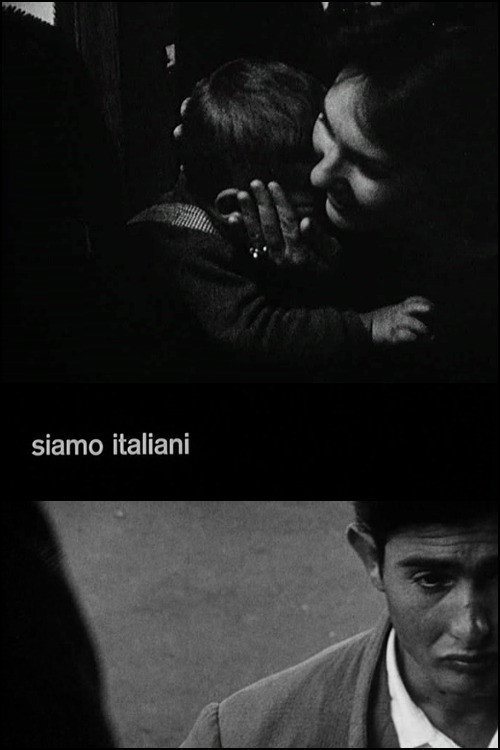
We Italians 1964
Dive into the poignant world of *We Italians (1964)*, a compelling documentary by visionary director Alexander J. Seiler that shines a light on the Italian laborers who journeyed to Switzerland in search of opportunity.
Director: Alexander J. Seiler
Frequently Asked Questions
What is We Italians (1964) about?
*We Italians (1964)* follows the lives of Italian migrants who moved to Switzerland in search of work during the mid-20th century. The documentary captures their daily challenges, cultural adjustments, and the impact of their labor on both their new home and their homeland.
Who directed We Italians?
Alexander J. Seiler directed *We Italians (1964)*, bringing a sensitive and observational approach to this documentary about migration and labor.
Who stars in We Italians?
Cast details for *We Italians (1964)* are not specified, as it is a documentary featuring real-life migrants and workers rather than actors.
Is We Italians (1964) worth watching?
While lacking an IMDb rating, *We Italians (1964)* offers a historically rich and socially relevant perspective, making it compelling for fans of documentaries and European history. Its authentic portrayal of migrant experiences adds depth that resonates beyond its runtime.
How long is We Italians?
*We Italians (1964)* has a runtime of 75 minutes.
About We Italians (1964) — A moving documentary on Italian migrant workers in Switzerland
Dive into the poignant world of *We Italians (1964)*, a compelling documentary by visionary director Alexander J. Seiler that shines a light on the Italian laborers who journeyed to Switzerland in search of opportunity. Through evocative storytelling and immersive visuals, the film captures the struggles and triumphs of these migrants, painting a vivid portrait of cultural exchange and economic ambition.
Set against the backdrop of post-war Europe, *We Italians (1964)* explores themes of displacement, resilience, and the human cost of labor migration. The atmosphere is both nostalgic and raw, blending personal narratives with broader societal observations. As one of the era's standout documentaries, it offers a rare glimpse into the lives of those who shaped a chapter of European history, making it a must-watch for fans of thoughtful, socially conscious cinema.