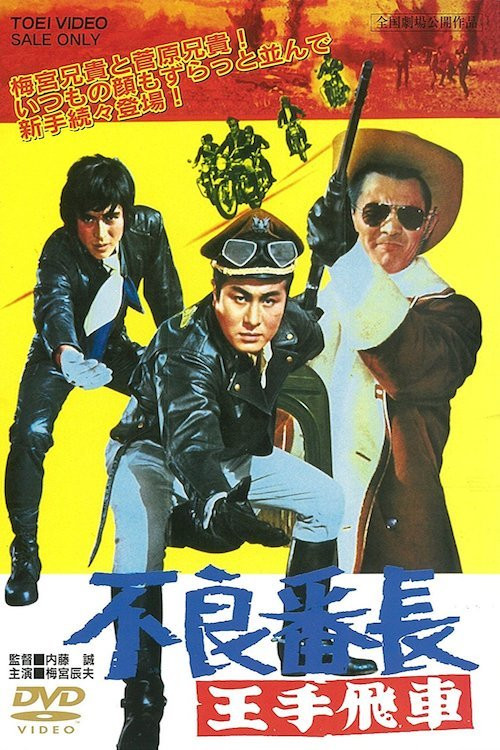
Wolves of the City: Checkmate 1970
Dive into the gritty underbelly of Tokyo's neon-lit streets with *Wolves of the City: Checkmate* (1970), the sixth pulse-pounding installment in Makoto Naito's infamous 'pinku' crime saga.
Director: Makoto Naito
Cast





Frequently Asked Questions
What is Wolves of the City: Checkmate (1970) about?
The film follows a biker gang descending into moral chaos as they embrace violent, provocative imagery and rebel against societal norms. Led by a charismatic but volatile leader, the gang's reckless actions spiral into a series of confrontations, testing loyalty and survival.
Who directed Wolves of the City: Checkmate?
Makoto Naito directed *Wolves of the City: Checkmate*, helming this controversial entry in the long-running 'pinku' crime-action series.
Who stars in Wolves of the City: Checkmate?
The film features a compelling cast including Tatsuo Umemiya as the gang's leader, Hayato Tani, Tamami Natsu, Fumiko Sakakibara, and Shingo Yamashiro.
Is Wolves of the City: Checkmate (1970) worth watching?
With its unfiltered blend of crime, action, and provocative themes, *Wolves of the City: Checkmate* offers a fascinating if divisive snapshot of late-'60s Japanese counterculture. It may not appeal to everyone, but fans of gritty, exploitative cinema will find it a compelling watch.
How long is Wolves of the City: Checkmate?
The film runs for 87 minutes, delivering a tight, energetic dive into its high-octane world.
🎥 Trailer
About Wolves of the City: Checkmate (1970) — Biker Gang Crime Saga Unpacked
Dive into the gritty underbelly of Tokyo's neon-lit streets with *Wolves of the City: Checkmate* (1970), the sixth pulse-pounding installment in Makoto Naito's infamous 'pinku' crime saga. This raw, unfiltered action-drama blends seedy biker gang antics with the decade's rebellious counterculture, stripping away morality to expose a world where violence and seduction lurk around every corner. Directed by Naito, the film zeroes in on a gang that co-opts jarring, inflammatory imagery—think provocative symbols and exaggerated outlaw posturing—while its sprawling cast, led by Tatsuo Umemiya and Hayato Tani, navigates a landscape where loyalty is scarce and chaos reigns supreme.
Layered with soft-core elements, gunplay, and a defiant disregard for convention, *Wolves of the City: Checkmate* captures the chaotic spirit of late-'60s Japan, where youth rebellion and moral ambiguity collide. The film's atmosphere is thick with tension and transgression, making it a fascinating, if divisive, artifact of its time. Fans of raw, unapologetic cinema will find much to dissect in this audacious entry.