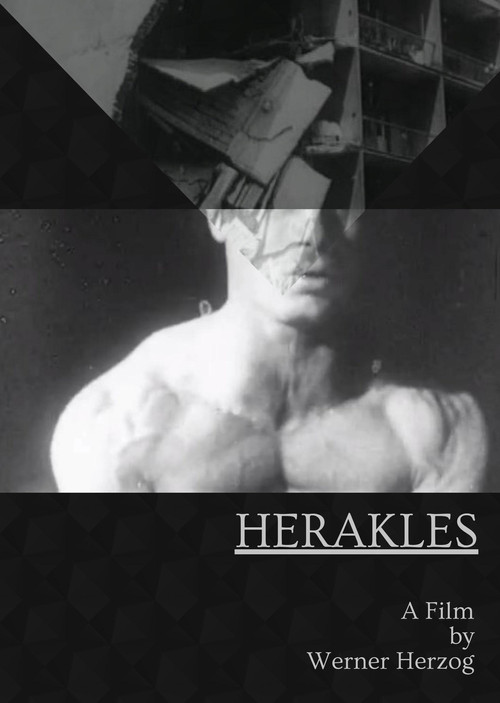
Herakles 1962
Dive into Werner Herzog's early experimental documentary short *Herakles* (1962), a sharp 10-minute collage that dissects the myth of machismo through striking visual contrasts.
Director: Werner Herzog
Cast
Frequently Asked Questions
What is Herakles (1962) about?
*Herakles* isn't a traditional narrative but a visual essay blending stark imagery of physical strength with scenes of mechanical destruction. Herzog contrasts the disciplined bodies of bodybuilders with the chaos of warplanes and crashes, exploring how power manifests in both human and machine form.
Who directed Herakles?
The film was directed by the legendary Werner Herzog, whose early work already showcased his fascination with human endurance and the sublime in the everyday.
Who stars in Herakles?
The short features bodybuilder Reinhard Lichtenberg and athlete Franco Columbu among others, their physical presence driving the film's central themes.
Is Herakles (1962) worth watching?
For fans of Herzog's later masterpieces or those intrigued by experimental documentaries, *Herakles* is a compelling time capsule. Its brevity and bold concept make it a rewarding watch for viewers seeking offbeat cinema that challenges perceptions of strength and masculinity.
How long is Herakles?
*Herakles* runs for 10 minutes.
About Herakles (1962) — A 10-Minute Exploration of Power and Myth
Dive into Werner Herzog's early experimental documentary short *Herakles* (1962), a sharp 10-minute collage that dissects the myth of machismo through striking visual contrasts. Framed by Herzog's signature eye for raw authenticity, the film stitches together seemingly unrelated footage—bodybuilders flexing under glaring lights, fighter jets unleashing bombs, and high-impact car crashes—each frame a meditation on raw power and latent aggression.
The atmosphere is electric, oscillating between visceral spectacle and quiet introspection, as Herzog probes what lurks beneath the surface of masculine bravado. Though shot on a shoestring budget, the film's montage technique and thematic boldness feel decades ahead of its time, offering a provocative snapshot of 1960s cultural anxieties wrapped in cinematic poetry.