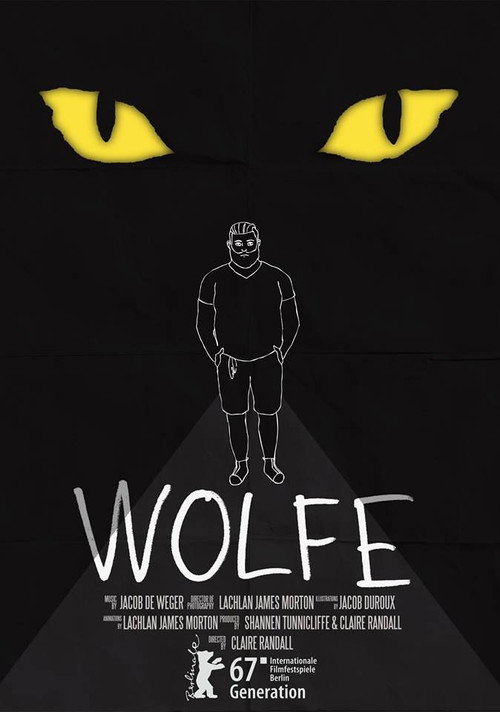
Wolfe 2016
Wolfe (2016) peels back the layers on a deeply personal and unsettling journey into childhood imagination transformed into stark reality.
Director: Claire Randall
Cast
Frequently Asked Questions
What is Wolfe (2016) about?
Wolfe (2016) explores Nick Childs' unsettling realization that his childhood imaginary friend was not just real—but dangerous. The film blends personal confession with psychological tension, revealing how a once-innocent bond curdled into something far more disturbing as he grew older.
Who directed Wolfe?
Wolfe was directed by Claire Randall, who crafts a tight, atmospheric documentary that balances raw emotion with subtle unease.
Who stars in Wolfe?
The documentary stars Nick Childs, the subject of the film, whose candid account forms its emotional core.
Is Wolfe (2016) worth watching?
Wolfe (2016) is a gripping short documentary that delivers a unique perspective on psychological horror through personal storytelling. While it's unrated on IMDb, its tight runtime and atmospheric tension make it compelling for fans of intimate, thought-provoking films.
How long is Wolfe?
Wolfe has a runtime of 16 minutes.
🎥 Trailer
About Wolfe (2016) — A dark confession from the mind's shadowy corners
Wolfe (2016) peels back the layers on a deeply personal and unsettling journey into childhood imagination transformed into stark reality. Directed by Claire Randall, this 16-minute documentary follows Nick Childs as he recounts discovering his once-whimsical imaginary companion had not faded with age, but instead evolved into something far more sinister.
The film drifts between confessional intimacy and haunting ambiguity, exploring themes of identity, trauma, and the blurred line between memory and hallucination. With a minimalist yet immersive approach, Wolfe (2016) invites viewers into Nick's world—a place where nostalgia curdles into dread, and the mind's playground becomes a stage for quiet horror. It's a short but powerful meditation on how the past lingers, and why some companions refuse to leave, even when they should.