Trapline 1976
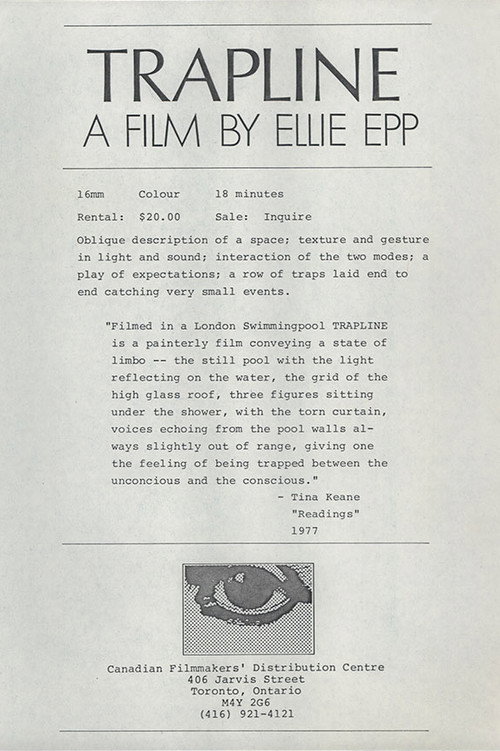
Ellie Epp's *Trapline (1976)* is a poetic 12-shot documentary that transforms the demolition of a London public bath into a meditative exploration of space, time, and urban decay.
Director: Ellie Epp
Frequently Asked Questions
What is Trapline (1976) about?
*Trapline (1976)* captures the final days of a soon-to-be-demolished London public bath through a series of 12 carefully composed shots. The documentary transforms mundane spaces into a meditative reflection on urban decay and transience.
Who directed Trapline?
The film was directed by Ellie Epp, a filmmaker known for her experimental and visually poetic approach to documentary cinema.
Who stars in Trapline?
Cast information for *Trapline (1976)* is not publicly listed.
Is Trapline (1976) worth watching?
While *Trapline* is a niche experimental documentary, its minimalist beauty and meditative pacing make it a rewarding experience for fans of thoughtful, slow cinema. Its 18-minute runtime is a quick yet impactful dive into visual storytelling without heavy dialogue or action.
How long is Trapline?
*Trapline (1976)* has a runtime of 18 minutes.
About Trapline (1976) — Ellie Epp's Poetic 12-Shot Documentary Masterpiece
Ellie Epp's *Trapline (1976)* is a poetic 12-shot documentary that transforms the demolition of a London public bath into a meditative exploration of space, time, and urban decay. Shot with deliberate precision, the film lingers on the textures of peeling paint, flickering lights, and empty corridors, turning a soon-to-be-forgotten building into a canvas for subtle storytelling. The camera's patient gaze invites viewers to read between the frames, uncovering layers of meaning in what might otherwise be dismissed as mundane. With a runtime of just 18 minutes, Epp crafts a cinema of delicate implication, where absence speaks as loudly as presence.
This short documentary isn't just a time capsule of 1970s urban life—it's a testament to the power of minimalism in filmmaking. *Trapline (1976)* challenges audiences to find art in the overlooked, proving that even the most fleeting moments can carry profound emotional weight. Whether you're a fan of experimental cinema or simply appreciate quietly evocative storytelling, Epp's work lingers long after the final shot.