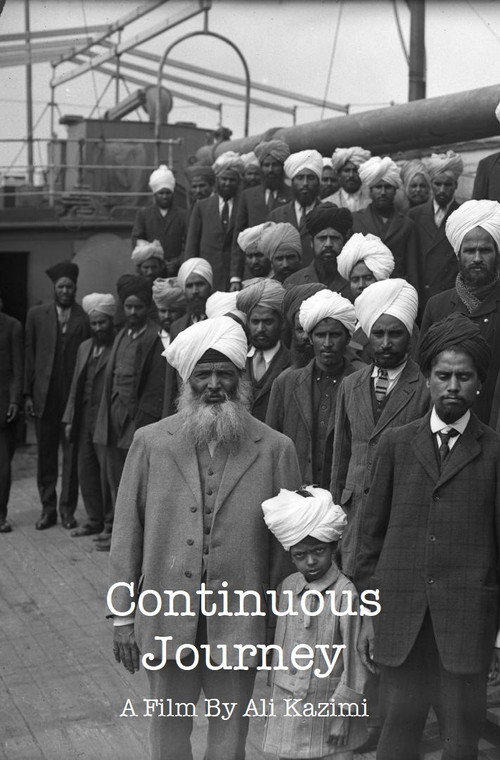
Continuous Journey 2004
Delve into the hidden history of Canada's exclusion of South Asians through the lens of the Continuous Journey Regulation of 1908. This thought-provoking documentary, directed by the insightful Ali Kazimi, sheds light on a lesser-known chapter in Canadian history.
Director: Ali Kazimi
Frequently Asked Questions
What is Continuous Journey (2004) about?
This documentary film explores the little-known history of Canada's exclusion of South Asians through the lens of the Continuous Journey Regulation of 1908.
Who directed Continuous Journey?
Ali Kazimi directed this thought-provoking documentary.
Who stars in Continuous Journey?
Unfortunately, the main cast is not available in the provided information.
Is Continuous Journey (2004) worth watching?
As an unrated documentary, Continuous Journey (2004) offers a unique perspective on Canadian history, but its worthiness to watch ultimately depends on individual preferences and interests.
How long is Continuous Journey?
The documentary has a runtime of 87 minutes.
About Continuous Journey (2004) — A Journey Through Canada's Forgotten Past
Delve into the hidden history of Canada's exclusion of South Asians through the lens of the Continuous Journey Regulation of 1908. This thought-provoking documentary, directed by the insightful Ali Kazimi, sheds light on a lesser-known chapter in Canadian history. As we embark on this continuous journey, we are met with a complex web of themes, including identity, exclusion, and the struggle for belonging. By exploring the true story of the Komagata Maru, this film challenges our perceptions of a nation's past and its impact on the lives of its people.
With its engaging narrative and powerful themes, Continuous Journey (2004) is a must-watch for those interested in documentary films, Canadian history, and the human experience. By examining the lives of those affected by the regulation, this film offers a poignant reminder of the importance of understanding and respecting our differences. As we reflect on the past, we are left to ponder the relevance of these events to our present and future.