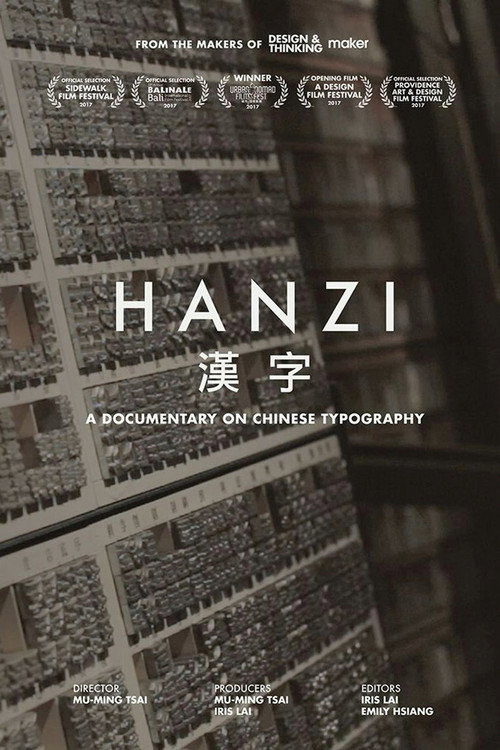
Hanzi 2017
"Exploring Language and Culture through Chinese Typography"
Dive into the visually striking world of *Hanzi (2017)*, a compelling documentary directed by Mu-Ming Tsai that examines the intersection of language, design, and cultural identity through modern Chinese typography.
Director: Mu-Ming Tsai
Frequently Asked Questions
What is Hanzi (2017) about?
*Hanzi (2017)* is a documentary that explores how Chinese typography reflects broader themes of identity, tradition, and modernity. Through the lens of design, the film examines the role of handwriting in preserving cultural heritage amid rapid digital transformation.
Who directed Hanzi?
Hanzi was directed by Mu-Ming Tsai, a filmmaker whose work often bridges visual culture and personal narrative.
Who stars in Hanzi?
Cast details for *Hanzi (2017)* are not publicly listed, but the film features designers, calligraphers, and cultural experts as central voices.
Is Hanzi (2017) worth watching?
As a niche but thought-provoking documentary, *Hanzi* offers unique insights for design enthusiasts and those interested in cultural narratives. With a runtime under an hour, it's a concise yet immersive experience that balances aesthetics and substance.
How long is Hanzi?
The runtime of *Hanzi (2017)* is 57 minutes.
🎥 Trailer
About Hanzi (2017) — A Deep Dive into Chinese Typography and Cultural Identity
Dive into the visually striking world of *Hanzi (2017)*, a compelling documentary directed by Mu-Ming Tsai that examines the intersection of language, design, and cultural identity through modern Chinese typography. Over 57 minutes, the film traces how characters shape perception, bridging ancient traditions with today's digital landscapes. It's a celebration of handcrafted artistry in an era dominated by keyboards, revealing how ink and paper preserve a sense of self in a globalized world.
Through interviews and stunning visuals, *Hanzi* explores themes of heritage, adaptation, and the quiet rebellion of staying connected to roots. The atmosphere is contemplative yet vibrant, mirroring the contrast between centuries-old calligraphy and neon-lit cityscapes. For anyone fascinated by design, culture, or the stories behind symbols, this film offers a rare glimpse into how language evolves—and why it still matters.