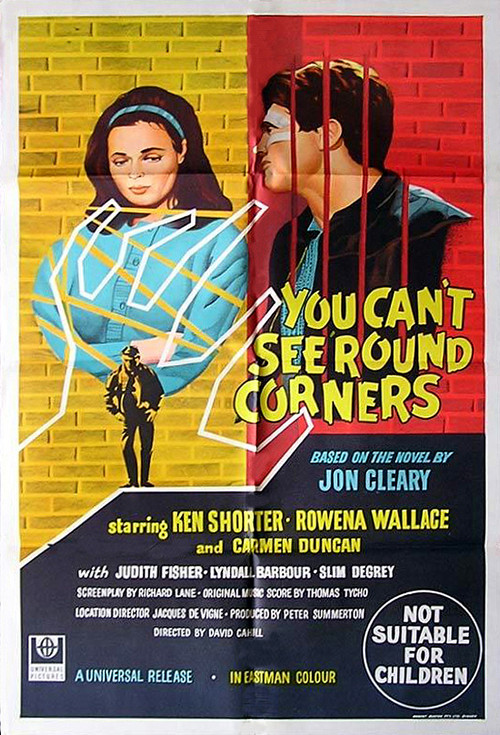
You Can't See 'round Corners 1969
"Frankie was a born loser . . . who took on the whole world!"
Dive into the gritty world of *You Can't See 'round Corners* (1969), a raw and rebellious Australian drama directed by David Cahill.
Director: David Cahill
Cast

Frequently Asked Questions
What is *You Can't See 'round Corners* (1969) about?
The film follows Frankie McCoy, a Sydney gambler and deserter drafted into the Vietnam War, as he spirals into debt and chaos. His pursuit of money and survival leads to a gripping tale of rebellion and consequence.
Who directed *You Can't See 'round Corners*?
David Cahill helmed this intense drama, capturing the raw energy of 1960s Australian cinema.
Who stars in *You Can't See 'round Corners*?
The film features standout performances from Ken Shorter, Rowena Wallace, Carmen Duncan, Judith Fisher, and Lyndall Barbour in a tight-knit ensemble.
Is *You Can't See 'round Corners* (1969) worth watching?
While IMDb unrated, this underrated gem offers a unique blend of crime, romance, and war drama. Its authentic portrayal of Vietnam-era tension and rebellious characters makes it a must-see for classic film fans.
How long is *You Can't See 'round Corners*?
The film runs for 98 minutes, delivering a tight and immersive story.
About You Can't See 'round Corners (1969) — Sydney's Rebel Gambler in Vietnam-Era Chaos
Dive into the gritty world of *You Can't See 'round Corners* (1969), a raw and rebellious Australian drama directed by David Cahill. Starring Ken Shorter as Frankie McCoy, a flawed but magnetic antihero from Sydney's Newtown, the film follows his spiral from small-time gambler and SP bookie to a desperate deserter caught in the Vietnam War draft. Shot on location at Kapooka camp, this underseen classic offers one of cinema's rare glimpses of Australian soldiers training for Vietnam, blending crime, romance, and war into a tense, emotionally charged narrative.
With its moody atmosphere and unflinching look at societal outcasts, *You Can't See 'round Corners* captures the restless spirit of the 1960s. The film's themes of fate, debt, and rebellion resonate through Cahill's direction and Shorter's electrifying performance, making it a compelling watch for fans of character-driven dramas.