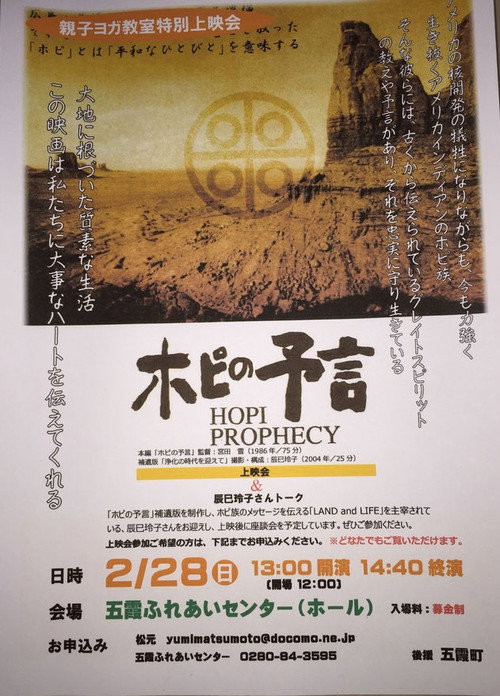
The Hopi Prophecy 1987
"The thread that ties Hopi & Hiroshima"
Directed by Kiyoshi Miyata, *The Hopi Prophecy (1987)* is a powerful documentary that weaves together the struggles of the Hopi and Navajo tribes against the relentless exploitation of their ancestral lands.
Director: Kiyoshi Miyata
Cast

Frequently Asked Questions
What is *The Hopi Prophecy (1987)* about?
This documentary explores the Hopi and Navajo tribes' fight against uranium and plutonium mining on their sacred lands, framed as a modern struggle against historical and environmental injustice.
Who directed *The Hopi Prophecy*?
The film was directed by Kiyoshi Miyata, whose work often delves into cultural and environmental themes.
Who stars in *The Hopi Prophecy*?
The documentary features prominent Indigenous voices, including Kei Satō, alongside interviews with Hopi and Navajo community members.
Is *The Hopi Prophecy (1987)* worth watching?
While IMDb hasn't rated it, the film's unique blend of Indigenous storytelling and environmental urgency makes it a compelling watch for fans of documentary cinema.
How long is *The Hopi Prophecy*?
The runtime is 75 minutes.
About The Hopi Prophecy (1987) — A documentary on Indigenous resistance and nuclear scars
Directed by Kiyoshi Miyata, *The Hopi Prophecy (1987)* is a powerful documentary that weaves together the struggles of the Hopi and Navajo tribes against the relentless exploitation of their ancestral lands. The film exposes the devastation wrought by uranium and plutonium mining, which the Indigenous communities describe as 'carving out the earth's vital organs.' Through raw interviews and striking visuals, Miyata captures the deep spiritual and environmental crisis unfolding in the American Southwest, where corporate greed collides with Indigenous resilience.
Rather than just documenting injustice, *The Hopi Prophecy* frames these struggles as part of a larger, almost prophetic cycle of destruction and renewal. The film's haunting atmosphere lingers as it draws parallels between the ecological devastation in Hopi territory and the nuclear scars of Hiroshima, creating a poignant meditation on survival, memory, and the cost of progress. Its concise 75-minute runtime keeps the narrative tight, making it both an urgent call to action and a moving historical record.