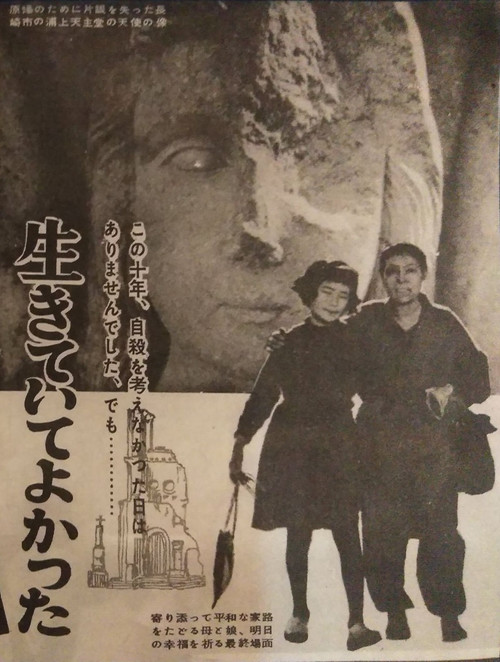
It Is Good to Live 1956
It Is Good to Live (1956) stands as a groundbreaking documentary that bears witness to one of history's most devastating chapters. Directed by Fumio Kamei, this 48-minute film gives voice to the hibakusha—survivors of the atomic bombings of Hiroshima and Nagasaki.
Director: Fumio Kamei
Cast
Frequently Asked Questions
What is It Is Good to Live (1956) about?
This documentary focuses on survivors of the Hiroshima and Nagasaki atomic bombings, documenting their personal stories and the lasting effects of radiation on their lives. It combines survivor testimony with footage of destruction and recovery efforts.
Who directed It Is Good to Live?
The film was directed by Fumio Kamei, a pioneering Japanese filmmaker known for his documentary work addressing post-war Japanese society and the atomic bomb's impact.
Who stars in It Is Good to Live?
Mitsuko Yamada appears in the documentary, which primarily features real survivors sharing their experiences rather than traditional acting roles.
Is It Is Good to Live (1956) worth watching?
Despite being unrated on IMDb, this documentary holds significant historical and cinematic value as one of the earliest examinations of nuclear warfare's human toll. Its powerful testimonies and historical importance make it compelling viewing for those interested in documentary filmmaking or 20th-century history.
How long is It Is Good to Live?
The documentary runs for 48 minutes.
It Is Good to Live (1956): Hiroshima Survivors' Story — Full Movie Info
It Is Good to Live (1956) stands as a groundbreaking documentary that bears witness to one of history's most devastating chapters. Directed by Fumio Kamei, this 48-minute film gives voice to the hibakusha—survivors of the atomic bombings of Hiroshima and Nagasaki. Through intimate testimonies and haunting imagery of destruction and rebuilding, the documentary chronicles the enduring physical and emotional scars carried by those who lived through the nuclear attacks. The film captures both the immediate aftermath and long-term radiation effects, creating a powerful testament to human resilience in the face of unprecedented tragedy.
Mitsuko Yamada leads the cast in this unflinching examination of nuclear warfare's human cost. Kamei's direction combines stark documentary footage with personal narratives, crafting an early cinematic plea for peace that remains deeply relevant today. The atmosphere is somber yet hopeful, honoring survivors while serving as a stark warning against future nuclear conflict. As one of the first films to explore atomic bomb aftermath, It Is Good to Live (1956) occupies an important place in documentary cinema and anti-war filmmaking.