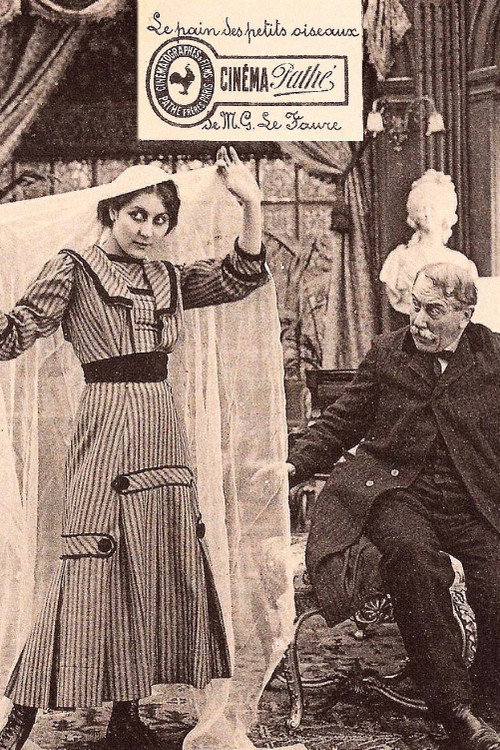
Bread for the Birds 1911
In Albert Capellani's charming 1911 silent drama *Bread for the Birds*, the dazzling world of the stage becomes the unlikely backdrop for a poignant rags-to-riches tale.
Director: Albert Capellani
Cast


Frequently Asked Questions
What is Bread for the Birds (1911) about?
This 1911 silent drama follows a talented dancer whose career takes an unexpected turn when a compassionate piano tutor becomes her benefactor. As she strives for success, she must grapple with the emotional weight of his kindness and the realities of her newfound fortune. The film weaves together ambition, gratitude, and the fragile nature of dreams behind the glittering curtain of the theater.
Who directed Bread for the Birds?
Albert Capellani, a pioneer of early French cinema, directed *Bread for the Birds*. Known for his skillful storytelling and focus on human relationships, Capellani's work often explored themes of class and ambition, as seen in this intimate backstage drama.
Who stars in Bread for the Birds?
The film features Stacia Napierkowska as the lead dancer, with Lucien Callamand, Paule Andral, and Pauline Patry rounding out the cast in key supporting roles.
Is Bread for the Birds (1911) worth watching?
While *Bread for the Birds* lacks an official rating, its historical significance, emotional core, and Capellani's deft direction make it a rewarding watch for fans of silent cinema and early 20th-century storytelling. Its concise runtime and poignant themes of gratitude and ambition offer a compelling glimpse into a bygone era of filmmaking.
How long is Bread for the Birds?
The runtime of *Bread for the Birds* is 13 minutes.
About Bread for the Birds (1911) — A Silent Classic of Hope and Sacrifice on Stage
In Albert Capellani's charming 1911 silent drama *Bread for the Birds*, the dazzling world of the stage becomes the unlikely backdrop for a poignant rags-to-riches tale. The film unfolds behind the scenes and in the spotlight, where a gifted dancer finds herself caught between ambition and gratitude when an older, kind-hearted piano tutor takes an interest in her career. As she navigates the pressures of performance and the complexities of her benefactor's generosity, the story explores themes of sacrifice, class, and the fleeting nature of fortune. Capellani's delicate direction infuses the short film with a mix of warmth and melancholy, painting a portrait of a bygone era where art and opportunity intertwined.
Set against the opulent yet fragile elegance of early 20th-century theater culture, *Bread for the Birds* captures a moment of transition for its heroine—one where dreams are both her compass and her burden. The film's understated yet powerful performances and its focus on the human side of artistic pursuit make it a standout in Capellani's filmography. With its concise runtime and emotional depth, *Bread for the Birds (1911)* offers a snapshot of silent cinema at its most evocative.