Madame de Sade 1992
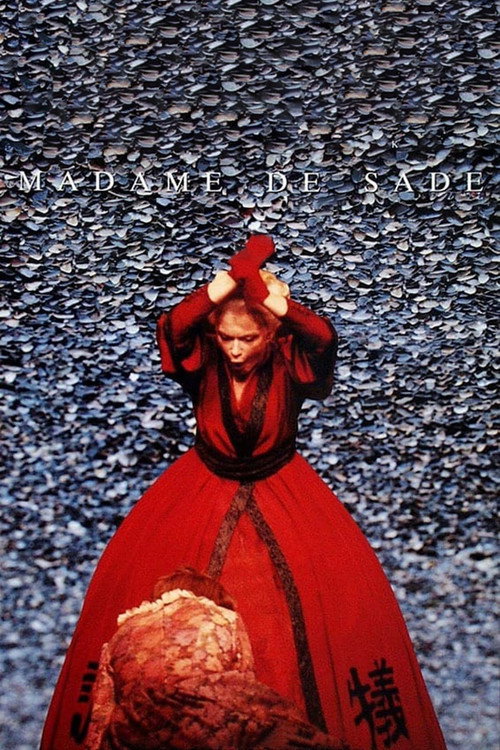
Ingmar Bergman's striking 1992 television adaptation of Yukio Mishima's *Madame de Sade* transports viewers to the turbulent years of late 18th-century France, where the shadow of the Marquis de Sade looms large over six women entangled in a web of l...
Director: Ingmar Bergman
Cast





Frequently Asked Questions
What is Madame de Sade (1992) about?
Set in pre-revolutionary France, this drama follows six women as they confront the scandalous legend of the Marquis de Sade, whose imprisonment leaves them to confront their own conflicting loyalties, moral convictions, and the price of devotion. Their debates reveal as much about the women themselves as they do about the infamous figure they revere—or resent.
Who directed Madame de Sade?
The legendary Ingmar Bergman directed this 1992 television adaptation of Yukio Mishima's play. Known for his emotionally raw and psychologically intense films, Bergman brought his signature depth to this cerebral exploration of power and morality.
Who stars in Madame de Sade?
The ensemble cast features Stina Ekblad as Renée, alongside Anita Björk, Marie Richardson, Margaretha Byström, Agneta Ekmanner, and Helena Brodin, each delivering a masterclass in restrained intensity.
Is Madame de Sade (1992) worth watching?
For fans of Ingmar Bergman's later works, *Madame de Sade* is a compelling and thought-provoking watch, though its deliberate pacing and dialogue-heavy style may not appeal to everyone. Its themes of devotion and moral ambiguity resonate strongly, especially for those drawn to period dramas with intellectual depth. If you enjoy stage-to-screen adaptations that prioritize substance over spectacle, this is a rare gem worth seeking out.
How long is Madame de Sade?
The film runs for 104 minutes, a tight runtime that keeps the intellectual tension sharp and the conversations gripping.
Madame de Sade (1992): Ingmar Bergman's Haunting Stage Adaptation Explored
Ingmar Bergman's striking 1992 television adaptation of Yukio Mishima's *Madame de Sade* transports viewers to the turbulent years of late 18th-century France, where the shadow of the Marquis de Sade looms large over six women entangled in a web of loyalty, scandal, and moral reckoning. Rather than a conventional historical drama, Bergman's vision is a cerebral, dialogue-driven exploration of devotion and power, unfolding from 1772 through the chaos of the French Revolution. Starring Stina Ekblad as Renée, the Marquis's wife, the film probes the contradictions of love and ideology as each woman grapples with her own interpretation of loyalty in the face of infamy. With its austere staging and probing performances, *Madame de Sade (1992)* is less about spectacle and more about the intoxicating pull of a legend—and the fractured bonds it leaves in its wake.
Bergman transforms Mishima's provocative text into a haunting meditation on the nature of devotion, where morality is fluid and devotion is both a cage and a weapon. The screenplay crackles with intellectual tension as the women debate the Marquis's legacy, each voice reflecting a different facet of human complexity. Shot with Bergman's characteristic precision, the production immerses audiences in a world of candlelit interiors and whispered revelations, where power shifts like sand and no one escapes unchanged.