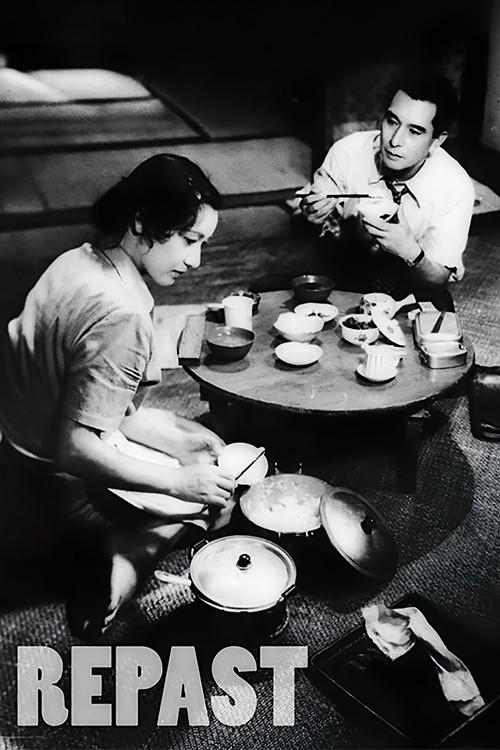
Repast 1951
Dive into *Repast (1951)*, Mikio Naruse's poignant drama that captures the quiet desperation of a woman trapped in the suffocating routine of domestic life.
Director: Mikio Naruse
Cast

Ken Uehara
Hatsunosuke Okamoto

Setsuko Hara
Michiyo Okamoto

Yukiko Shimazaki
Satoko Okamoto

Yōko Sugi
Mitsuko Murata

Akiko Kazami
Seiko Tomiyasu
Haruko Sugimura
Matsu Murata

Ranko Hanai
Koyoshi Dohya
Hiroshi Nihon'yanagi
Kazuo Takenaka

Keiju Kobayashi
Shinzo Murata
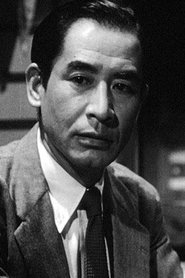
So Yamamura
Frequently Asked Questions
What is Repast (1951) about?
*Repast (1951)* follows Michiyo, a discontented housewife in Osaka who finds her once-happy marriage reduced to a cycle of cooking and cleaning. As her emotional isolation deepens, she confronts the hollow promises of domesticity and the fading of her own dreams. The film delicately explores her struggle to reclaim her identity amid societal constraints.
Who directed Repast?
Repast was directed by Mikio Naruse, a master of Japanese melodrama known for his keen observations of societal pressures and gender roles.
Who stars in Repast?
The film stars Ken Uehara as Michiyo's husband, Setsuko Hara as her perceptive friend, and Yukiko Shimazaki, Yōko Sugi, Akiko Kazami, and Haruko Sugimura in pivotal supporting roles.
Is Repast (1951) worth watching?
Absolutely. While *Repast (1951)* isn't a high-energy thriller, its slow-burn drama offers profound insights into post-war Japanese society and the quiet battles of everyday women. Naruse's direction and Hara's performance make it a rewarding watch for cinephiles.
How long is Repast?
Repast (1951) has a runtime of 97 minutes, or just over 1.5 hours.
About Repast (1951) — A Housewife's Quiet Rebellion in Mikio Naruse's Masterpiece
Dive into *Repast (1951)*, Mikio Naruse's poignant drama that captures the quiet desperation of a woman trapped in the suffocating routine of domestic life. Set against the backdrop of post-war Osaka, the film follows Michiyo, whose once-bright marriage has dissolved into a monotonous cycle of endless chores and unfulfilled longing. As she grapples with her fading dreams, the pressures of societal expectations and the stark realities of her role as a housewife push her to the brink of rebellion. Naruse's masterful storytelling weaves a tale of emotional turbulence beneath a deceptively calm surface, blending realism with subtle feminist undertones.
With Ken Uehara and Setsuko Hara delivering raw, understated performances, *Repast (1951)* transforms a seemingly ordinary story into a timeless exploration of female resilience and disillusionment. The film's black-and-white cinematography amplifies the starkness of Michiyo's world, making every glance and gesture feel charged with unspoken tension. A slice-of-life drama with bite, it's a must-watch for fans of character-driven cinema that lingers long after the credits roll.