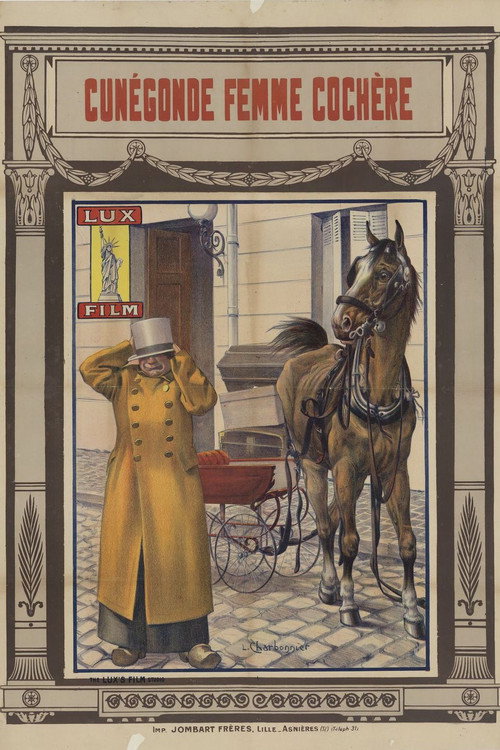
Cunégonde the Coachwoman 1913
In this 1913 silent comedy short, "Cunégonde the Coachwoman," a determined housewife steps into her husband's shoes when he's sidelined by injury.
Cast
Frequently Asked Questions
What is Cunégonde the Coachwoman (1913) about?
The film follows Cunégonde, who steps in as a coachwoman after her husband is ordered back to work before he's fully recovered. With humor and determination, she tackles the role with gusto, turning a domestic crisis into a comedic triumph.
Who directed Cunégonde the Coachwoman?
Director information is not available.
Who stars in Cunégonde the Coachwoman?
The film stars Little Chrysia in the lead role, with an ensemble cast of early silent-era performers whose names have been lost to time.
Is Cunégonde the Coachwoman (1913) worth watching?
As a silent-era comedy short, its value lies in its historical charm and clever premise rather than modern pacing. While no ratings exist, its seven-minute runtime makes it a quirky curiosity for fans of early cinema, offering a glimpse into 1913 humor and social norms.
How long is Cunégonde the Coachwoman?
The film runs for 7 minutes.
🎥 Trailer
About Cunégonde the Coachwoman (1913) — A 1913 Silent Comedy Classic in 7 Minutes
In this 1913 silent comedy short, "Cunégonde the Coachwoman," a determined housewife steps into her husband's shoes when he's sidelined by injury. Faced with an ultimatum to resume his coachman duties or lose his job entirely, she seizes the reins—literally—taking on the role with unexpected enthusiasm and flair. The seven-minute film captures a playful reversal of gender norms, wrapped in slapstick energy and early cinema charm. Director unknown, this featherweight satire thrives on its absurd premise and the spirited performance of its lead, blending mischief with a wink at social expectations of the era.
Cunégonde's impromptu career pivot unfolds with lighthearted chaos, showcasing the clever subversion of traditional roles. Though long lost to time, the film's premise lingers as a testament to early silent-era storytelling—quick, witty, and brimming with character. As one of the era's many ephemeral gems, "Cunégonde the Coachwoman (1913)" offers a fleeting but memorable glimpse into the comedic sensibilities of 1910s cinema.