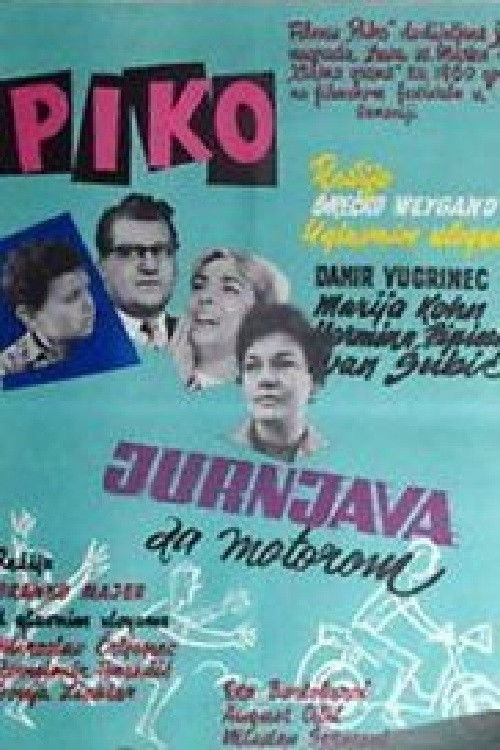
Piko 1959
"Piko (1959)" is a poignant short film directed by Srećko Weygand that captures the quiet desperation of childhood when adults are too preoccupied to notice.
Director: Srećko Weygand
Cast
Frequently Asked Questions
What is Piko (1959) about?
The film centers on a young boy who, feeling overlooked by his busy parents, wanders the city alone as a form of protest. His journey highlights the emotional toll of neglect and the search for belonging in an uncaring world.
Who directed Piko?
Piko was directed by Srećko Weygand, a filmmaker known for his evocative storytelling in mid-century European cinema.
Who stars in Piko?
The film features Damir Vugrinec as Piko, with Marija Kohn, Hermina Pipinić, and Ivan Šubić rounding out the main cast.
Is Piko (1959) worth watching?
While it's a short film with a runtime of just 39 minutes, Piko offers a surprisingly rich exploration of childhood loneliness and family dynamics. Its themes and atmosphere may resonate more with fans of introspective, character-driven cinema rather than mainstream audiences.
How long is Piko?
Piko has a runtime of 39 minutes.
About Piko (1959) — A Short Film of Childhood Loneliness and Silent Protest
"Piko (1959)" is a poignant short film directed by Srećko Weygand that captures the quiet desperation of childhood when adults are too preoccupied to notice. Set against the bustling backdrop of a 1950s city, the story follows a young boy whose protests of neglect take the form of aimless wandering through unfamiliar streets. Shot in black-and-white, the film conveys a melancholic atmosphere, emphasizing themes of loneliness and the search for connection in a world that feels indifferent. The compact runtime of 39 minutes allows Weygand to focus on intimate moments, making the boy's emotional journey feel both urgent and intimate.
The simplicity of the premise belies its emotional depth—"Piko" isn't just a family film but a reflection on how small voices can go unheard in the chaos of adult life. With a cast that includes Damir Vugrinec as the titular boy and Marija Kohn as his distracted mother, the film balances realism with symbolic storytelling, leaving viewers to ponder the cost of distraction and the resilience of youth. It's a quiet yet powerful exploration of childhood resilience, wrapped in the understated artistry of mid-century European cinema.