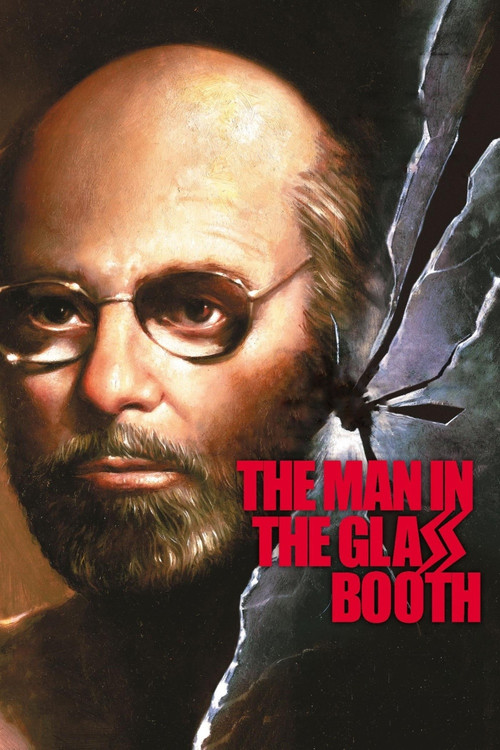
The Man in the Glass Booth 1975
"The kidnapping... The masquerade... The murder trial... Perhaps the most suspenseful shocker of our time."
Dive into the psychological depths of *The Man in the Glass Booth (1975)*, a gripping drama-thriller directed by Arthur Hiller that challenges perceptions of justice and identity.
Director: Arthur Hiller
Cast







Frequently Asked Questions
What is *The Man in the Glass Booth (1975)* about?
The film follows Arthur Goldman, a wealthy Manhattan industrialist accused of being a Nazi war criminal by Israeli agents. As he's whisked to Israel for trial, the story becomes a gripping battle of wits and morality, forcing Goldman to confront his accusers—and their own complicity. It's a tense exploration of guilt, memory, and the blurred lines between victim and perpetrator.
Who directed *The Man in the Glass Booth*?
Arthur Hiller, known for his work in dramas and thrillers, directs this intense character study. His sharp direction elevates the film's moral ambiguities and psychological depth.
Who stars in *The Man in the Glass Booth*?
Maximilian Schell leads the cast as Arthur Goldman, with standout performances from Lois Nettleton, Lawrence Pressman, and Luther Adler.
Is *The Man in the Glass Booth (1975)* worth watching?
Absolutely—if you love morally complex thrillers with strong performances. Schell's portrayal is electric, and the film's themes of justice and identity make it a compelling watch. While it's a product of its time, its questions about guilt and memory remain timeless and thought-provoking.
How long is *The Man in the Glass Booth*?
The film runs for 117 minutes, offering a tightly paced narrative that keeps viewers on the edge of their seats.
🎥 Trailer
About The Man in the Glass Booth (1975) — A Psychological Thriller of Identity and Justice
Dive into the psychological depths of *The Man in the Glass Booth (1975)*, a gripping drama-thriller directed by Arthur Hiller that challenges perceptions of justice and identity. Maximilian Schell delivers a tour-de-force performance as Arthur Goldman, a wealthy Manhattan industrialist whose life unravels when he's accused of being a Nazi war criminal by Israeli secret agents. What begins as a shocking masquerade spirals into a tense courtroom battle, forcing Goldman—and his accusers—to confront uncomfortable truths about guilt, memory, and the weight of history. With its razor-sharp dialogue and moral complexity, this film blurs the line between victim and villain, leaving audiences questioning where justice ends and vengeance begins.
Set against the stark backdrop of a modern high-rise and an Israeli courtroom, the film's atmosphere crackles with tension, blending Hitchcockian suspense with a haunting exploration of Jewish identity and survival. Hiller's direction amplifies the story's themes, making *The Man in the Glass Booth (1975)* a thought-provoking thriller that lingers long after the final verdict.