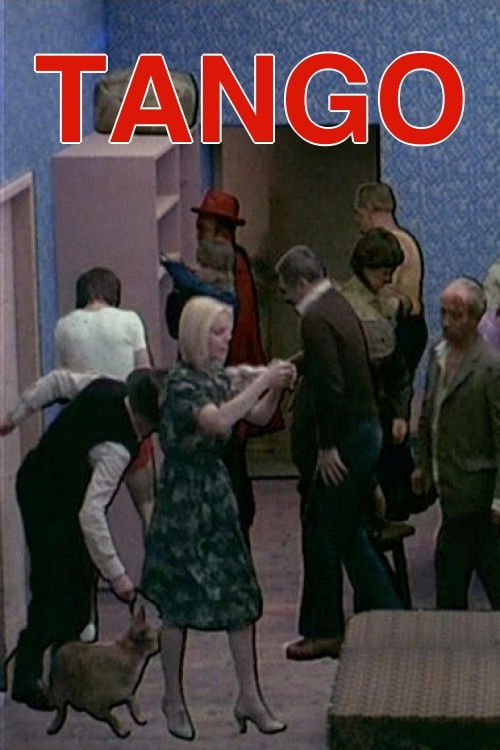
Tango 1985
Tango (1985), a mesmerizing animated short from visionary director Zbigniew Rybczyński, presents a hypnotic loop of life's stages unfolding within a single room.
Director: Zbigniew Rybczyński
Frequently Asked Questions
What is Tango (1985) about?
Tango is a surreal animated short that captures the passage of life through a single, unchanging room. The film follows 36 animated characters as they cycle through moments of connection and disconnection, each trapped in their own dance of existence. The static camera and looping structure create a mesmerizing commentary on time, society, and the absurdity of human interaction.
Who directed Tango?
Tango was directed by Zbigniew Rybczyński, a pioneering Polish filmmaker and animator known for his innovative visual storytelling and experimental techniques.
Who stars in Tango?
Cast details for Tango (1985) are not publicly listed.
Is Tango (1985) worth watching?
Though unrated, Tango (1985) is a cult favorite among animation enthusiasts for its bold visuals and philosophical depth. At just 8 minutes long, it's a quick yet impactful experience that rewards viewers with its surreal charm and clever commentary on life's rhythms—ideal for fans of abstract cinema.
How long is Tango?
Tango (1985) runs for 8 minutes.
About Tango (1985): A Hypnotic Loop of Life and Isolation — Full Movie Info
Tango (1985), a mesmerizing animated short from visionary director Zbigniew Rybczyński, presents a hypnotic loop of life's stages unfolding within a single room. The camera remains locked in place as an ever-growing cast of 36 vividly animated characters—from infants to the elderly—enter and interact in a choreographed dance of fleeting connections. Each figure moves with deliberate autonomy, creating a visually stunning commentary on isolation and the absurdity of social rituals. The film's tightly controlled perspective and repetitive structure amplify its themes of cyclical time and human detachment. With its bold visual style and philosophical undercurrents, Tango stands as a landmark in experimental animation that lingers long after the credits roll.
Rybczyński crafts a surreal ballet where every movement feels both random and inevitable, blurring the line between individuality and conformity. The monochrome palette and geometric precision heighten the surreal atmosphere, turning the ordinary into something uncanny. This isn't just a dance—it's a meditation on existence, where every step echoes the past while hurtling toward an uncertain future. Tango (1985) is a fleeting yet unforgettable experience, perfect for fans of animation that challenges as much as it enthralls.