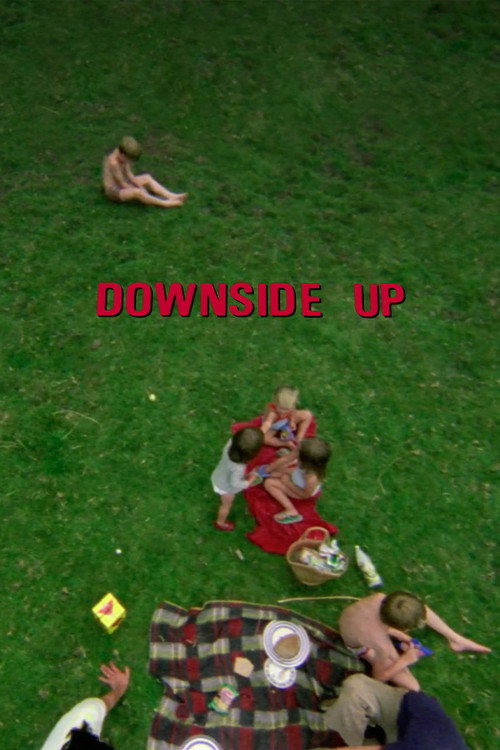
Downside Up 1985
Tony Hill's *Downside Up* (1985) is a mesmerizing experimental short that transforms everyday moments into a hypnotic study of perspective.
Director: Tony Hill
Frequently Asked Questions
What is *Downside Up* (1985) about?
*Downside Up* (1985) is an experimental short that redefines how we see the world through a single, ever-moving camera. By orbiting people, places, and objects, the film turns everyday scenes into a visual meditation on duality and change.
Who directed *Downside Up*?
Tony Hill directed *Downside Up* (1985), bringing a unique vision to experimental filmmaking with his signature long-take technique.
Who stars in *Downside Up*?
Cast details for *Downside Up* (1985) are not publicly listed, reflecting its focus on visual storytelling over traditional performances.
Is *Downside Up* (1985) worth watching?
*Downside Up* (1985) is a niche but rewarding watch for fans of experimental cinema. Its innovative camera work and abstract themes make it a cult favorite, though it may not appeal to everyone due to its minimalist style.
How long is *Downside Up*?
*Downside Up* (1985) runs for 17 minutes, a brief yet impactful experience that lingers long after the credits roll.
About Downside Up (1985) — A Mind-Bending Camera Orbit You Won't Forget
Tony Hill's *Downside Up* (1985) is a mesmerizing experimental short that transforms everyday moments into a hypnotic study of perspective. Shot in a single, continuous orbit, the film lingers on objects, people, and landscapes before gradually accelerating its rotation, revealing a world that flips between stability and chaos—much like a coin toss deciding fate. The camera's slow pivot captures the mundane with poetic precision, then whips through observations at a dizzying pace before settling back into a meditative rhythm, oscillating at the edge of perception.
With its minimalist approach, *Downside Up* (1985) challenges viewers to reconsider the spaces around them, blending artistry with the raw unpredictability of existence. The film's abstract yet tangible vision makes it a standout in experimental cinema, where the ground beneath us isn't just a surface—it's a dynamic, ever-shifting realm of possibility.