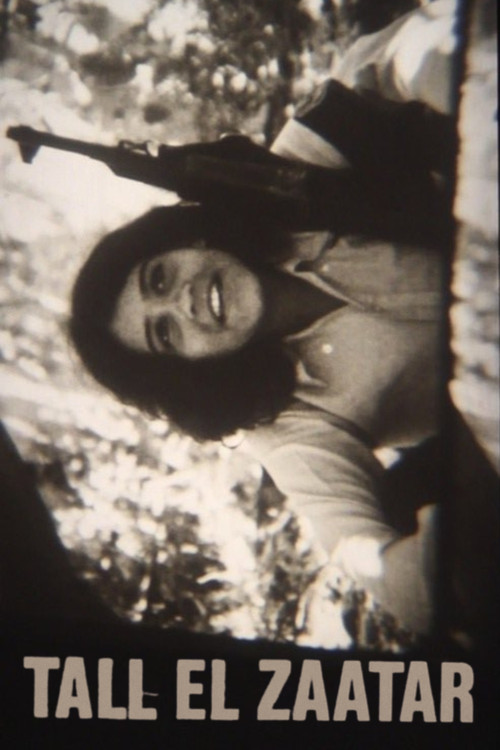
Tall el Zaatar 1977
Jean Khalil Chamoun's *Tall el Zaatar (1977)* is a haunting documentary that captures one of the darkest chapters of Lebanon's civil war.
Director: Jean Khalil Chamoun
Frequently Asked Questions
What is Tall el Zaatar (1977) about?
*Tall el Zaatar (1977)* chronicles the 1976 siege of a Palestinian refugee camp in Beirut by right-wing militias during Lebanon's civil war. After months of blockade and bombardment, the camp's fall led to a massacre of over 2,500 civilians. The film documents this tragedy with unflinching realism, blending historical footage with the voices of survivors.
Who directed Tall el Zaatar?
The film was directed by Jean Khalil Chamoun, a Lebanese filmmaker whose work focuses on documenting war and its human toll.
Who stars in Tall el Zaatar?
Director Jean Khalil Chamoun is the central creative force, while the film features survivors and historical footage as its 'cast'.
Is Tall el Zaatar (1977) worth watching?
If you appreciate politically charged documentaries that prioritize historical truth over spectacle, *Tall el Zaatar (1977)* is essential viewing. Its unfiltered portrayal of war crimes makes it a sobering, if difficult, experience. Though unrated on IMDb, its impact lies in its raw authenticity rather than entertainment value.
How long is Tall el Zaatar?
The film runs for 71 minutes, a concise yet intense runtime that matches its harrowing subject matter.
About Tall el Zaatar (1977) — The Lebanese Civil War's Untold Horror in 71 Minutes
Jean Khalil Chamoun's *Tall el Zaatar (1977)* is a haunting documentary that captures one of the darkest chapters of Lebanon's civil war. Shot in real time, the film documents the brutal 1976 siege of the Tall al-Zaatar refugee camp in Beirut—a harrowing 71-minute account of civilians trapped without food, water, or medical aid under relentless artillery and sniper fire. When the camp finally fell on August 12, over 2,500 people were massacred, and the camp was razed, leaving behind a scar on history that the film refuses to let fade. Chamoun's unflinching lens transforms historical footage into a visceral meditation on war's inhumanity, where the cost of survival is measured in human lives.
Through stark imagery and unfiltered realism, *Tall el Zaatar (1977)* exposes the ideological fractures and humanitarian crises of Lebanon's 15-year conflict. The documentary's power lies in its immediacy, stripping away political rhetoric to reveal the raw suffering of ordinary people caught in the crossfire. It's not just a record of tragedy—it's a plea for remembrance and a stark reminder of how quickly humanity can unravel when hatred takes the upper hand.