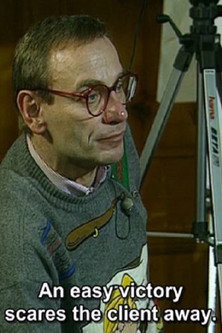
Re-education 1994
Harun Farocki's *Re-education (1994)* dives into the post-Wall era with a sharp, observational lens, revisiting the corporate seminars once used to indoctrinate workers from the former GDR.
Director: Harun Farocki
Frequently Asked Questions
What is Re-education (1994) about?
*Re-education (1994)* follows a West German construction company's efforts to integrate its former East German employees through corporate training sessions. Director Harun Farocki examines how language, ideology, and economics collide in post-reunification Germany. The film blends documentary realism with subtle critique of systemic change.
Who directed Re-education?
Harun Farocki directed *Re-education (1994)*. Known for his experimental documentaries, Farocki often explored themes of power, labor, and societal transformation.
Who stars in Re-education?
Cast details for *Re-education (1994)* are not publicly listed. The documentary focuses on real employees undergoing corporate training rather than actors.
Is Re-education (1994) worth watching?
As a documentary, *Re-education (1994)* offers a fascinating glimpse into a pivotal historical moment. Its minimalist approach rewards viewers seeking depth over spectacle. While not widely rated, its themes of transition and identity make it a standout in Farocki's filmography. A must-see for documentary enthusiasts.
How long is Re-education?
The runtime of *Re-education (1994)* is 44 minutes.
About Re-education (1994) — A 1990s corporate seminar exposes Cold War-era tensions
Harun Farocki's *Re-education (1994)* dives into the post-Wall era with a sharp, observational lens, revisiting the corporate seminars once used to indoctrinate workers from the former GDR. This compelling documentary captures the tension of a West German construction firm integrating its East German employees through what's euphemistically called "re-education." Farocki contrasts the rigid structures of the past with the uncertain transitions of the 1990s, crafting a quietly unsettling portrait of systemic change. Shot in minimalist style, the 44-minute film strips away pretension, exposing how language, authority, and identity collide when ideology gives way to economic pragmatism.
Farocki's work remains a vital document of reunification-era contradictions, where corporate seminars masquerade as progress. The film's restrained tone belies its provocative undercurrents—layers of nostalgia, resentment, and adaptation play out in unspoken glances and carefully scripted training sessions. *Re-education (1994)* isn't just about history; it's a mirror held up to the uneasy compromises of modern capitalism.