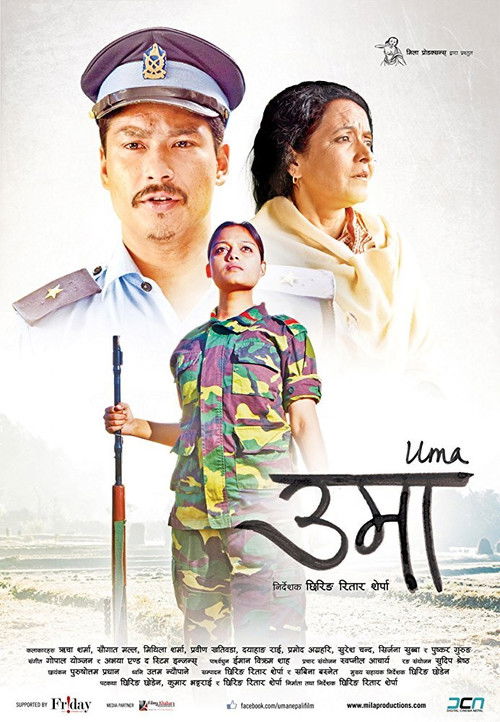
Uma 2013
Set in Nepal's rural heartlands at the turn of the millennium, *Uma (2013)* follows a resilient young woman, her younger brother Milan, and their widowed mother as they navigate daily life against the backdrop of the Maoist insurgency.
Director: Tsering Rhitar Sherpa
Cast






Frequently Asked Questions
What is Uma (2013) about?
This Nepali drama centers on Uma, her younger brother Milan, and their widowed mother struggling to hold their family together during the Maoist insurgency in early 2000s rural Nepal. The story explores their resilience as they confront both personal loss and political chaos.
Who directed Uma?
Uma was directed by Tsering Rhitar Sherpa, a filmmaker known for blending intimate character studies with broader social commentary.
Who stars in Uma?
The film features Reecha Sharma in the lead role of Uma, alongside Saugat Malla, Mithila Sharma, Dayahang Rai, and Pramod Agrahari in key supporting parts.
Is Uma (2013) worth watching?
While IMDb ratings are unavailable, Uma offers a compelling, human-scale drama set against a turbulent historical backdrop. Its emotional depth and authentic storytelling make it a rewarding watch for fans of character-driven films and South Asian cinema.
How long is Uma?
The film runs for 160 minutes, offering an immersive storytelling experience.
About Uma (2013) — A Himalayan family's quiet battle for survival during war
Set in Nepal's rural heartlands at the turn of the millennium, *Uma (2013)* follows a resilient young woman, her younger brother Milan, and their widowed mother as they navigate daily life against the backdrop of the Maoist insurgency. Director Tsering Rhitar Sherpa crafts a quiet but powerful portrait of survival, family bonds, and the unyielding spirit of women caught between tradition and turmoil. With stunning Himalayan landscapes and an emotionally charged narrative, the film delivers a deeply human story that lingers long after the credits roll.
Starring Reecha Sharma as the determined Uma, the ensemble cast—including Saugat Malla and Dayahang Rai—brings authenticity to a tale of perseverance in the face of political upheaval. The film blends intimate family drama with the harsh realities of rural Nepal, creating an atmosphere both tense and tender. Though the genre isn't officially listed, *Uma* straddles the line between drama and socially conscious cinema, offering a rare glimpse into a transitional era.