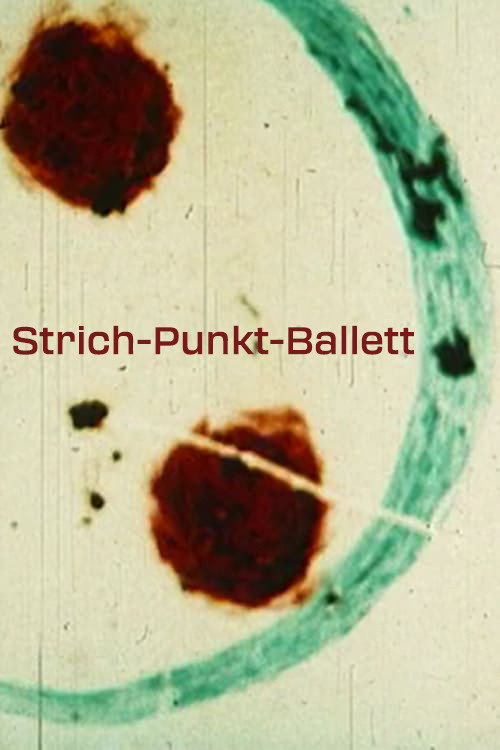
Strich-Punkt-Ballett 1943
Herbert Seggelke's *Strich-Punkt-Ballett (1943)* stands as a fleeting yet fascinating gem in the realm of early experimental animation.
Director: Herbert Seggelke
Frequently Asked Questions
What is Strich-Punkt-Ballett (1943) about?
*Strich-Punkt-Ballett* is an abstract experimental film that showcases a dynamic interplay between lines, dots, and geometric forms. Without relying on dialogue or conventional storytelling, it creates a mesmerizing visual rhythm that feels like a silent ballet of shapes. The film's focus is purely on movement and contrast, making it a study in artistic experimentation.
Who directed Strich-Punkt-Ballett?
Herbert Seggelke directed *Strich-Punkt-Ballett* in 1943. Known for his innovative approach to animation, Seggelke crafted this short film as part of the experimental cinema movement of his time.
Who stars in Strich-Punkt-Ballett?
Cast details for *Strich-Punkt-Ballett* are not listed, as the film is a non-narrative experimental piece without credited performers.
Is Strich-Punkt-Ballett (1943) worth watching?
While *Strich-Punkt-Ballett* is a niche experimental film, its historical significance and unique visual style make it intriguing for enthusiasts of early animation and avant-garde cinema. Its short runtime and abstract nature mean it's best appreciated as a curiosity rather than a mainstream experience, but its creativity is undeniable.
How long is Strich-Punkt-Ballett?
*Strich-Punkt-Ballett* has a runtime of 3 minutes.
About Strich-Punkt-Ballett (1943) — The Fascinating History of a Minimalist Animation Classic
Herbert Seggelke's *Strich-Punkt-Ballett (1943)* stands as a fleeting yet fascinating gem in the realm of early experimental animation. Clocking in at just three minutes, this abstract short film eschews narrative in favor of a hypnotic dance of lines and dots, where geometric precision meets rhythmic fluidity. The black-and-white visuals pulse with an otherworldly energy, transforming simple shapes into a mesmerizing ballet of movement and form. Seggelke's avant-garde approach challenges conventional storytelling, inviting viewers to immerse themselves in a purely visual symphony—one that feels both timeless and distinctly modern in its bold minimalism.
Belying its brevity, *Strich-Punkt-Ballett* (1943) carries a weighty artistic ambition, pushing the boundaries of animation as an expressive medium. The interplay of stark contrasts and playful repetition creates an atmosphere that is at once playful and profound, leaving a lasting impression of innovation and curiosity. For fans of experimental cinema and early animation, this obscure masterpiece offers a rare glimpse into the experimental spirit of its era, where simplicity becomes a canvas for boundless creativity.