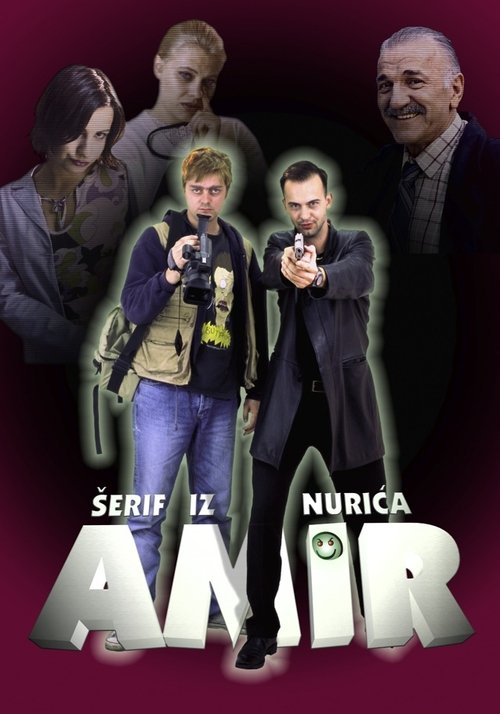
Amir 2002
In Amir (2002), Miha Čelar crafts a poignant slice-of-life tale that follows an Afghan refugee navigating the harsh realities of exile in Peshawar.
Director: Miha Čelar
Cast




Frequently Asked Questions
What is Amir (2002) about?
Amir (2002) tells the story of an Afghan refugee living in Peshawar, where he grapples with the harshness of exile while clinging to music as his lifeline. His passion for his craft becomes a bridge between his past in Herat and the uncertain present, surrounded by fellow musicians who share his sense of displacement.
Who directed Amir?
Amir was directed by Miha Čelar, who brings a sensitive, observational lens to this intimate refugee story.
Who stars in Amir?
The film stars Uroš Fürst as the titular Amir, alongside Aleksandra Balmazović, Magdalena Kropiunig, Marko Miladinovič, and Sonja Pavšič in key roles.
Is Amir (2002) worth watching?
As a compact yet emotionally rich comedy-drama, Amir (2002) offers a unique perspective on displacement, making it a compelling watch for fans of character-driven narratives. Its understated tone and focus on universal themes like home and artistry stand out, even if unrated on IMDb.
How long is Amir?
Amir (2002) has a runtime of 54 minutes.
About Amir (2002) — A refugee's journey through music and longing
In Amir (2002), Miha Čelar crafts a poignant slice-of-life tale that follows an Afghan refugee navigating the harsh realities of exile in Peshawar. Stranded far from his beloved Herat, Amir finds solace in music, pouring his longing and memories into melodies that echo his homeland. The film delicately weaves his daily struggles with the camaraderie of fellow musicians, painting a portrait of resilience and cultural displacement. Shot in under an hour, this Slovenian comedy-drama balances humor with heartache, creating an intimate atmosphere that lingers long after the credits roll.
Amir's journey is as much about survival as it is about self-expression. Through his relationships with other displaced artists, the film explores the universal power of art to bridge divides and preserve identity. With a runtime perfect for a concise yet meaningful viewing experience, Amir (2002) offers a rare glimpse into the lives of refugees beyond statistics, framed by the universal language of music.