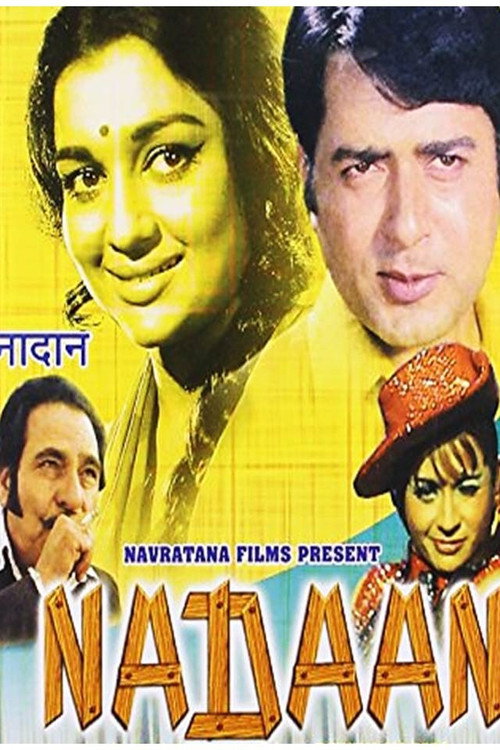
Nadaan 1971
In Deven Verma's Nadaan (1971), a dramatic tale of community division unfolds as generations of mistrust simmer between Ranimaa's powerful family and a nearby village.
Director: Deven Verma
Cast






Frequently Asked Questions
What is Nadaan (1971) about?
Nadaan (1971) follows Seema, the heir to Ranimaa's estate, as she challenges her family's long-standing feud by marrying Ajay Jain, a man from the rival community. Her bold attempt to unite two estranged groups sparks tension, testing both love and loyalty.
Who directed Nadaan?
Nadaan was directed by Deven Verma, a filmmaker known for his storytelling that blends emotional depth with social themes.
Who stars in Nadaan?
The film features Asha Parekh as Seema, Navin Nischol as Ajay Jain, with Nirupa Roy and Helen adding compelling support to the cast.
Is Nadaan (1971) worth watching?
For fans of classic Hindi drama, Nadaan (1971) offers a compelling mix of romance, family drama, and societal themes. While lacking a current IMDb rating, its 156-minute runtime suggests a rich narrative experience for those interested in vintage cinema.
How long is Nadaan?
Nadaan runs for 156 minutes.
About Nadaan (1971) — A Love Story Torn Between Tradition and Peace
In Deven Verma's Nadaan (1971), a dramatic tale of community division unfolds as generations of mistrust simmer between Ranimaa's powerful family and a nearby village. Seema, heir to Ranimaa's legacy, dares to bridge the divide by falling in love with Ajay Jain, a man from the other side. While Seema champions peace and unity, Ranimaa's stern disapproval and the deep-rooted rivalry threaten their future together. This Hindi-language drama masterfully blends romance with social tension, painting a poignant portrait of love clashing against tradition.
The film weaves in the vibrant energy of 1970s Hindi cinema, featuring standout performances from Asha Parekh and Navin Nischol at its heart. With Nirupa Roy and Helen adding layers of drama and intrigue, Nadaan captures the spirit of an era where personal choices often clashed with societal expectations. Its themes of reconciliation and generational change resonate even decades later, offering a timeless exploration of family, duty, and the cost of defiance.