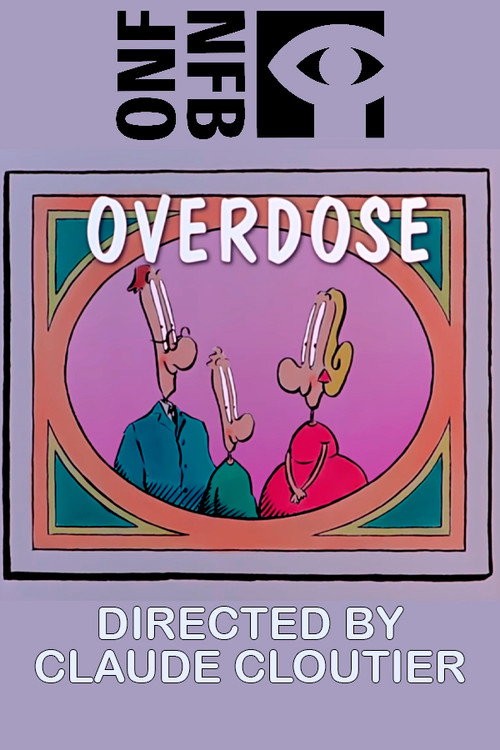
Overdose 1994
In *Overdose (1994)*, director Claude Cloutier crafts a poignant, dialogue-free animated short that captures the suffocating pressures of childhood perfection.
Director: Claude Cloutier
Frequently Asked Questions
What is Overdose (1994) about?
This animated short follows a young boy whose parents have packed his schedule with school, sports, and lessons, leaving him with no time for himself. The film serves as a visual plea for children's right to leisure and playtime, illustrating how overscheduling can stifle creativity and happiness.
Who directed Overdose?
Claude Cloutier directed *Overdose (1994)*, known for his distinctive animated works that blend social commentary with artistic innovation.
Who stars in Overdose?
The cast details for *Overdose (1994)* are not available, as the film is an animated short without credited voice actors.
Is Overdose (1994) worth watching?
*Overdose (1994)* is a thought-provoking animated short that packs a surprising emotional punch in just five minutes. While it's not a traditional narrative film, its themes of childhood pressure and the right to rest make it a compelling watch for fans of meaningful animation.
How long is Overdose?
Overdose (1994) has a runtime of 5 minutes.
Overdose: A Boy's Right to Rest — Full Movie Info
In *Overdose (1994)*, director Claude Cloutier crafts a poignant, dialogue-free animated short that captures the suffocating pressures of childhood perfection. The film follows a young boy whose every waking moment is meticulously scheduled—school, sports, music, and endless homework—leaving no room for the simple joys of play or self-discovery. Inspired by Article 31 of the UN Convention on the Rights of the Child, the story highlights the importance of rest and leisure as fundamental human needs. With its striking minimalist animation and evocative pacing, *Overdose* transforms a seemingly mundane routine into a commentary on modern parenting and societal expectations.
This 5-minute masterpiece blends humor with quiet urgency, using visual storytelling to underscore themes of autonomy and childhood freedom. Cloutier's direction eschews dialogue entirely, relying on expressive animation to convey emotion and critique. The result is a universally resonant tale that speaks to anyone who's ever felt overwhelmed by obligation or forgotten the value of unstructured time.