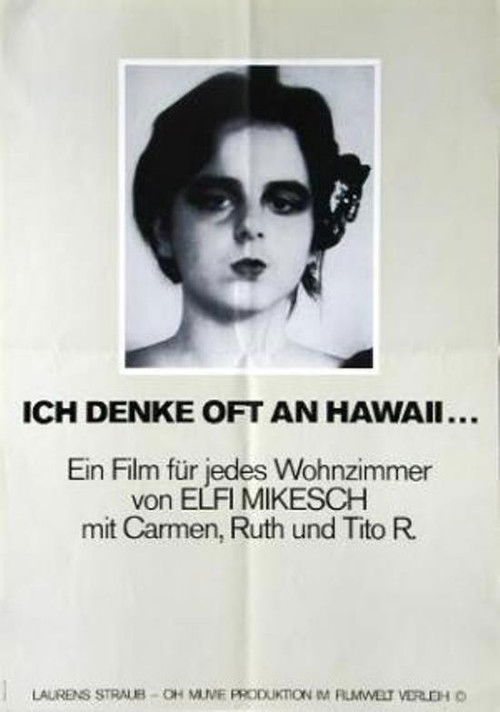
I Often Think of Hawaii 1978
Step into the bittersweet world of *I Often Think of Hawaii (1978)*, Elfi Mikesch's poetic semi-documentary that paints an intimate portrait of adolescence and longing.
Director: Elfi Mikesch
Cast
Frequently Asked Questions
What is I Often Think of Hawaii (1978) about?
This semi-documentary follows a 16-year-old Berlin schoolgirl living with her single mother after her Puerto Rican father, a soldier, abandons the family. She copes with her reality by immersing herself in the tropical fantasies left behind by her absent father, blending her mundane life with vibrant daydreams of Hawaii.
Who directed I Often Think of Hawaii?
The film was directed by Elfi Mikesch, an Austrian filmmaker known for her innovative blending of documentary and visual storytelling.
Who stars in I Often Think of Hawaii?
The main cast includes Carmen Rossol, Tito Rossol, and Ruth Rossol, who portray the film's core family.
Is I Often Think of Hawaii (1978) worth watching?
While lacking a formal IMDb rating, *I Often Think of Hawaii* stands out as a unique, atmospheric drama that rewards fans of poetic realism and experimental cinema. Its themes of escape and family resonate, though its slow pace may not appeal to all viewers.
How long is I Often Think of Hawaii?
The film runs for 82 minutes.
About I Often Think of Hawaii (1978) — A Dreamer's Escape in a Berlin Suburb
Step into the bittersweet world of *I Often Think of Hawaii (1978)*, Elfi Mikesch's poetic semi-documentary that paints an intimate portrait of adolescence and longing. Set in the industrial outskirts of West Berlin, the film follows a 16-year-old schoolgirl navigating the monotony of daily life with her single mother, while her Puerto Rican soldier father remains absent. Through the vivid postcards and records he left behind, she escapes into a dreamlike paradise—Hawaii—transforming her drab surroundings into a lush, sun-soaked fantasy. Mikesch's striking visual style blends documentary realism with dreamy, almost surreal imagery, capturing the tension between reality and imagination. The film is a tender meditation on memory, displacement, and the quiet resilience of youth.
As the protagonist drifts between her mundane chores and fleeting dreams, *I Often Think of Hawaii* becomes a poignant reflection on belonging and the power of escapism. With its raw emotional depth and experimental approach, Mikesch's debut offers a glimpse into the inner world of a young woman forging her own path amid fragmented family ties. The result is a quietly powerful exploration of identity, where the allure of Hawaii serves as both a comfort and a haunting reminder of what's lost.