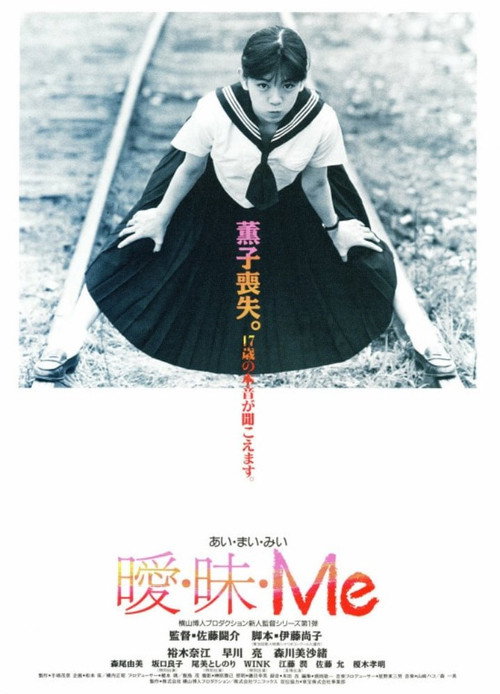
Ai・Mai・Me 1990
In 1990's *Ai・Mai・Me*, Tousuke Sato crafts a raw, atmospheric drama set in Fukuoka, where Kaoruko, a bright high school student and the daughter of a respected local doctor, wrestles with the weight of her future.
Director: Tousuke Sato
Cast






Frequently Asked Questions
What is Ai・Mai・Me (1990) about?
This 1990 drama follows Kaoruko, a studious high school student in Fukuoka, whose life takes a dark turn when her friend Natsumi invites her to join a private club with a disturbing purpose. The film explores themes of anxiety, peer pressure, and the blurred line between survival and surrender.
Who directed Ai・Mai・Me?
Ai・Mai・Me was directed by Tousuke Sato, a filmmaker known for his evocative, character-driven dramas set against modern Japanese life.
Who stars in Ai・Mai・Me?
The film features Nae Yuuki as Kaoruko, alongside Ryo Hayakawa, Yumi Morio, and Toshinori Omi in pivotal roles.
Is Ai・Mai・Me (1990) worth watching?
While unrated on IMDb, *Ai・Mai・Me* offers a compelling snapshot of 1990s Japanese youth culture and moral dilemmas. Its slow-burn tension and strong performances make it a compelling watch for fans of introspective dramas.
How long is Ai・Mai・Me?
Ai・Mai・Me runs for 110 minutes.
About Ai・Mai・Me (1990) — A Fukuoka High School Drama of Hidden Choices
In 1990's *Ai・Mai・Me*, Tousuke Sato crafts a raw, atmospheric drama set in Fukuoka, where Kaoruko, a bright high school student and the daughter of a respected local doctor, wrestles with the weight of her future. Her carefully constructed world shatters when a trusted friend extends an unsettling invitation—to a discreet, membership-based club that blurs the lines between choice and coercion. As Kaoruko grapples with fear and curiosity, the film unfolds like a slow-burning fever dream, steeped in the moral ambiguity of youth and the crushing expectations of society.
Naomi Yuuki delivers a haunting performance as Kaoruko, her internal turmoil mirroring the film's moody, introspective tone. Backed by a cast including Ryo Hayakawa and Yumi Morio, Sato weaves a story that's as much about the fragility of innocence as it is about the hidden undercurrents of Japan's urban youth culture in the late 20th century. *Ai・Mai・Me* lingers long after the credits roll, a quiet yet unsettling exploration of desperation and the search for belonging.