Hummingbird 1967
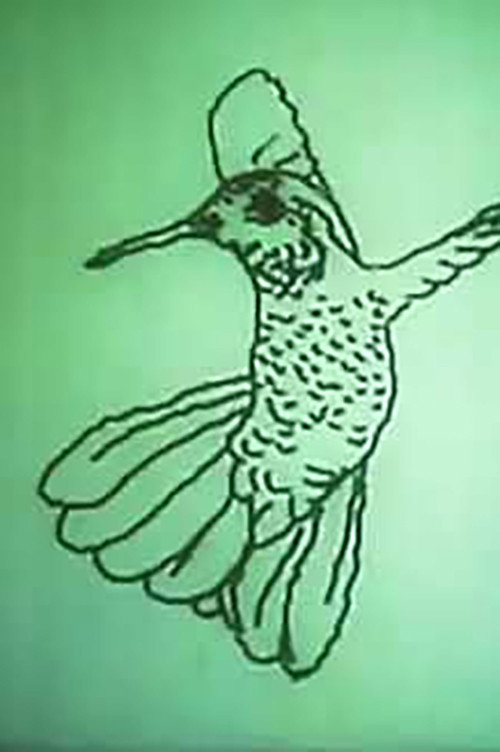
Hummingbird (1967) stands as a landmark in animation history, marking one of the first-ever computer-generated films created by visionary artist and programmer Charles Csuri.
Director: Charles Csuri
Frequently Asked Questions
What is Hummingbird (1967) about?
Hummingbird is a three-minute experimental computer-animated short that captures the graceful flight of its titular bird—only for it to dissolve into abstract digital patterns. The film explores the tension between realism and abstraction, showcasing early computer graphics as both a tool and an artistic medium.
Who directed Hummingbird?
Hummingbird was directed by Charles Csuri, a pioneering computer artist and programmer whose work bridged the gap between mathematics, technology, and visual art.
Who stars in Hummingbird?
Director information for the cast is not available.
Is Hummingbird (1967) worth watching?
Though unrated and under three minutes long, Hummingbird is a must-see for animation and digital art enthusiasts. Its historical significance as one of the first CGI films makes it a fascinating time capsule of technological experimentation in cinema.
How long is Hummingbird?
Hummingbird runs for approximately 3 minutes.
About Hummingbird (1967) — The First Computer Animation That Felt Like Poetry
Hummingbird (1967) stands as a landmark in animation history, marking one of the first-ever computer-generated films created by visionary artist and programmer Charles Csuri. Rather than simply depicting a hummingbird in motion, Csuri's experimental short pushes the boundaries of early CGI, transforming the bird into a fleeting digital apparition that dissolves into abstraction. The film's minimalist yet mesmerizing visuals challenge conventional notions of what computers could do in art during the 1960s, blending mathematical precision with organic grace. Set to an immersive soundtrack, the three-minute piece unfolds like a poetic dance between technology and nature, raising questions about the ephemeral nature of form and the evolving relationship between human creativity and machine logic.
As a pioneering work in computer animation, Hummingbird (1967) captures a moment when artists began to unlock the aesthetic potential of digital tools. Csuri's groundbreaking approach—turning cold algorithms into something warm and lifelike—captivated audiences and critics alike, earning him recognition as a true pioneer. Though brief, the film's impact resonates through decades of CGI advancements, serving as both an artifact of technological progress and a meditation on impermanence. Its abstract conclusion leaves viewers pondering the delicate balance between structure and spontaneity, a theme that feels even more relevant in today's digital age.