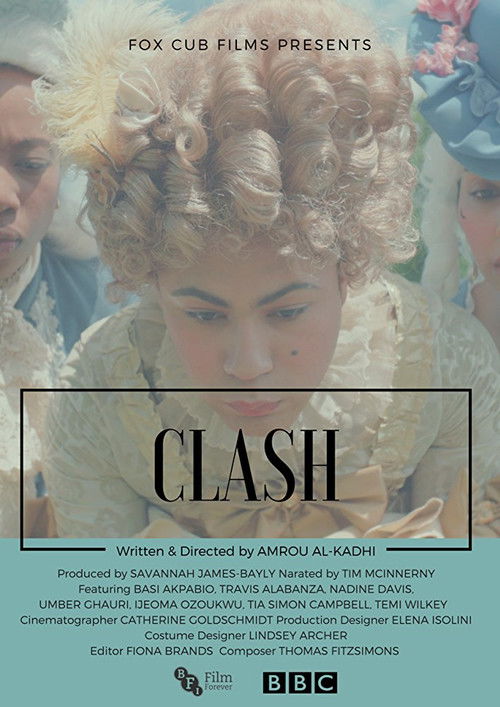
Clash 2017
Clash (2017) is an audacious 8-minute experimental documentary directed by Amrou Al-Kadhi, commissioned by the BBC and BFI, that dissects Britain's enduring love affair with period dramas.
Director: Amrou Al-Kadhi
Cast

Frequently Asked Questions
What is Clash (2017) about?
Clash (2017) is a short documentary that critiques Britain's fascination with period dramas, arguing they whitewash the country's diverse reality. Through candid interviews with queer people of color, it challenges the myth of national unity promoted by classic films like *Listen to Britain*.
Who directed Clash?
Clash was directed by Amrou Al-Kadhi, a filmmaker known for using experimental techniques to explore themes of identity and representation.
Who stars in Clash?
The film features interviews with Umber Ghauri, Nadine Davis, Tia Simon-Campbell, Basi Akpabio, and Temi Wilkey, among others.
Is Clash (2017) worth watching?
With its concise 8-minute runtime and sharp thematic focus, Clash (2017) is a thought-provoking watch for fans of documentary films. While unrated on IMDb, its bold approach to social commentary makes it a standout in the genre.
How long is Clash?
Clash (2017) runs for 8 minutes.
About Clash (2017) — How an 8-Minute Documentary Challenges Britain's Period Drama Myths
Clash (2017) is an audacious 8-minute experimental documentary directed by Amrou Al-Kadhi, commissioned by the BBC and BFI, that dissects Britain's enduring love affair with period dramas. Through a blend of parody and raw interviews, the film confronts the myth of national unity perpetuated by classics like Humphrey Jennings' *Listen to Britain*, revealing the stark absence of queer people of color in these cinematic fantasies. Shot through the unfiltered perspectives of underrepresented voices, Clash (2017) transforms nostalgia into a critical lens, exposing how historical narratives often rewrite contemporary diversity out of existence.
With a runtime that defies convention, this short documentary invites viewers into a provocative dialogue about identity, representation, and the stories we choose to tell. Al-Kadhi's unflinching approach, paired with a cast of vibrant interviewees, creates an atmosphere of urgency and authenticity that lingers long after the credits roll. It's a bold statement on the power of film to shape cultural memory—or distort it entirely.