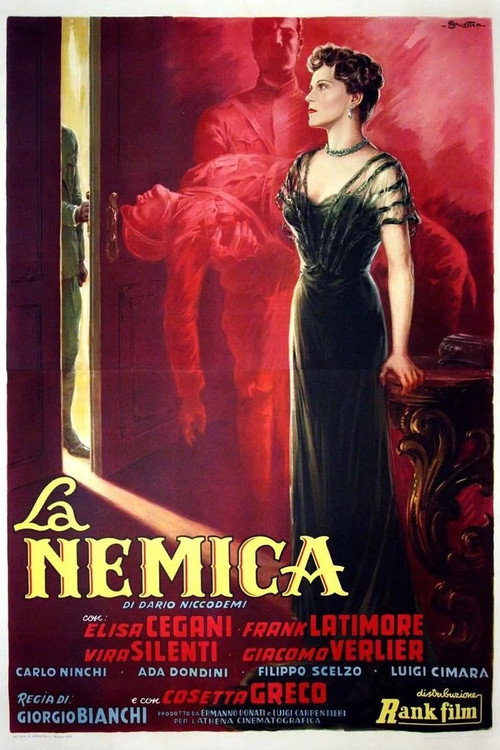
La nemica 1952
Set in post-war Italy, *La nemica (1952)* weaves a poignant drama around unresolved tensions and hidden resentments.
Director: Giorgio Bianchi
Cast







Frequently Asked Questions
What is La nemica (1952) about?
The film follows a woman navigating the emotional fallout of a broken relationship, where pride and past betrayals threaten to overshadow any chance of reconciliation. As she grapples with her feelings, the story examines the quiet battles fought in silence, revealing how resentment can shape lives long after wounds are inflicted.
Who directed La nemica?
Giorgio Bianchi brought *La nemica* to life, directing this drama with a keen eye for emotional authenticity and atmospheric tension.
Who stars in La nemica?
The film features Elisa Cegani as the lead, alongside Frank Latimore, Cosetta Greco, Sandro Franchina, and Vira Silenti in pivotal roles.
Is La nemica (1952) worth watching?
While not widely celebrated today, *La nemica* offers a compelling snapshot of post-war Italian drama, anchored by strong performances and a moody, introspective tone. Fans of character-driven stories with emotional depth may find it a hidden gem worth exploring.
How long is La nemica?
Runtime details are not listed.
About La nemica (1952) — A Forgotten Italian Drama of Love and Resentment
Set in post-war Italy, *La nemica (1952)* weaves a poignant drama around unresolved tensions and hidden resentments. Directed by Giorgio Bianchi, the film explores the fragile bonds between former lovers torn apart by betrayal and pride, unfolding in a world where silence speaks louder than words. Elisa Cegani delivers a standout performance as the protagonist, a woman whose quiet strength masks deep emotional wounds, while Frank Latimore brings a brooding intensity to the role of her estranged partner. The atmosphere is thick with unresolved longing and societal expectations, capturing the era's raw emotional landscape.
Cosetta Greco and Sandro Franchina round out the compelling cast, each adding layers of complexity to a story where love and resentment blur into indistinguishable shades of gray. As the narrative unfolds, the film masterfully blends intimate personal drama with broader themes of forgiveness and the cost of holding onto grudges. The black-and-white cinematography enhances the melancholic tone, immersing viewers in a world where every glance and gesture carries years of unspoken history.