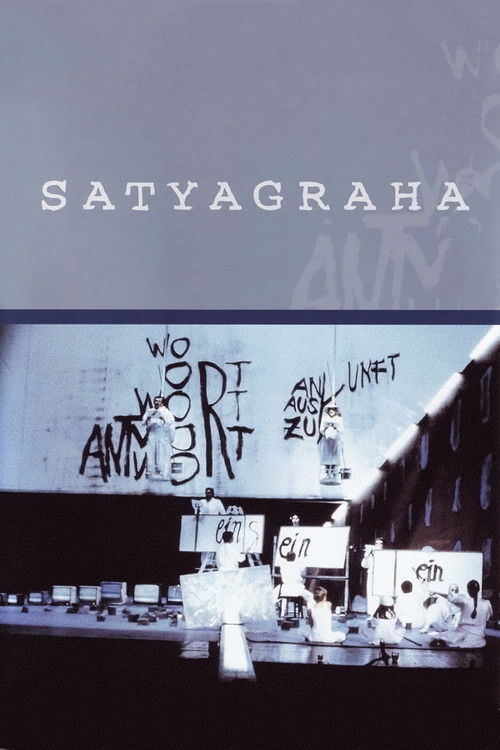
Philip Glass: Satyagraha 1983
Experience the mesmerizing fusion of music and history in Philip Glass: Satyagraha (1983), a transcendent opera that chronicles Mahatma Gandhi's journey in developing the philosophy of nonviolent resistance.
Director: Hugo Käch
Cast
Frequently Asked Questions
What is Philip Glass: Satyagraha (1983) about?
This opera traces Mahatma Gandhi's development of satyagraha, a philosophy of nonviolent resistance, through his connections to historical figures like Leo Tolstoy and Martin Luther King Jr. The film blends philosophical depth with Glass's iconic score, creating a meditative yet powerful narrative.
Who directed Philip Glass: Satyagraha?
The film was directed by Hugo Käch, who brought a visionary approach to this operatic exploration of Gandhi's legacy.
Who stars in Philip Glass: Satyagraha?
The opera features a cast including Leo Goeke, Ralf Harster, Helmut Danninger, Inga Nielsen, and Elke Estlinbaum, delivering powerful performances under Glass's direction.
Is Philip Glass: Satyagraha (1983) worth watching?
For fans of avant-garde music and historical biopics, this opera is a rare gem. Its hypnotic score and philosophical themes make it a compelling watch, though its niche appeal may limit broader interest.
How long is Philip Glass: Satyagraha?
The runtime is 168 minutes, offering an immersive experience that balances music and narrative.
About Philip Glass: Satyagraha (1983) — A Musical Journey of Nonviolent Resistance
Experience the mesmerizing fusion of music and history in Philip Glass: Satyagraha (1983), a transcendent opera that chronicles Mahatma Gandhi's journey in developing the philosophy of nonviolent resistance. Directed by Hugo Käch, this luminous film weaves together the lives of three pivotal figures—Leo Tolstoy, Rabindranath Tagore, and Martin Luther King Jr.—whose ideologies shaped Gandhi's revolutionary approach to activism. The opera's ethereal score, sung by a stellar cast including Leo Goeke and Inga Nielsen, immerses audiences in a meditative atmosphere that echoes the spiritual and intellectual depth of its subject. Set against a backdrop of oppressive regimes, the film explores themes of justice, moral courage, and the transformative power of passive resistance.
Philip Glass: Satyagraha (1983) stands as a testament to the enduring impact of peaceful protest, blending philosophical depth with avant-garde artistry. The opera's libretto, drawn from the *Bhagavad Gita*, adds layers of cultural and spiritual resonance, making it a unique cinematic experience. The synergy between Glass's hypnotic compositions and Käch's visionary direction creates an unforgettable viewing experience that challenges and inspires.