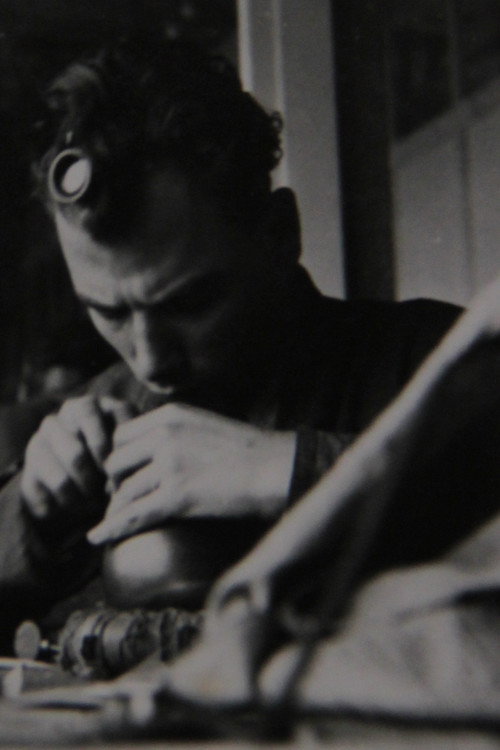
Kropotkin 2018
In 1887, Russian revolutionary Peter Kropotkin visited the Swiss Jura, a region dominated by the watchmaking trade and a hotbed of anarchist ideals.
Director: Cyril Schäublin
Frequently Asked Questions
What is Kropotkin (2018) about?
This 13-minute short film revisits Russian anarchist Peter Kropotkin's 1887 visit to the Swiss Jura, where he encountered a community of watchmakers whose egalitarian values deeply influenced his later theories. Director Cyril Schäublin crafts a poetic reflection on labor, freedom, and the intersection of personal conviction with collective movements.
Who directed Kropotkin?
Cyril Schäublin directed *Kropotkin (2018)*, bringing a measured yet evocative approach to this historical reflection.
Who stars in Kropotkin?
Cast details for *Kropotkin (2018)* are not publicly listed.
Is Kropotkin (2018) worth watching?
As a 13-minute experimental film focused on historical themes and visual storytelling, *Kropotkin (2018)* is best appreciated by audiences drawn to short-form cinema and political narratives. Its understated yet powerful approach makes it a compelling watch for fans of thought-provoking works.
How long is Kropotkin?
*Kropotkin (2018)* has a runtime of 13 minutes.
About Kropotkin (2018) — A 13-minute cinematic tribute to anarchist thought and watchmaking precision
In 1887, Russian revolutionary Peter Kropotkin visited the Swiss Jura, a region dominated by the watchmaking trade and a hotbed of anarchist ideals. The encounter left a lasting impression on the future theorist of libertarian communism, inspiring him to document the workers' egalitarian spirit and independent thinking in his diary. Director Cyril Schäublin revisits this pivotal moment in *Kropotkin (2018)*, weaving fragments of the diary into a visually compelling short film that captures the tension between labor and liberty.
Set against the backdrop of industrial precision and radical thought, the 13-minute film contrasts the ordered world of watchmaking with the chaotic energy of anarchist circles. Schäublin's work explores themes of autonomy, collective action, and the clash between tradition and rebellion, all while honoring Kropotkin's legacy as a voice for social transformation.