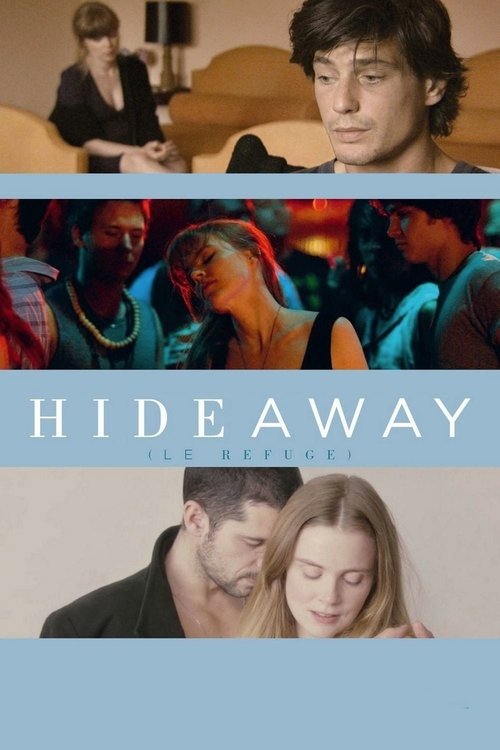
Hideaway (Le refuge) 2009
François Ozon's intimate drama *Hideaway (Le refuge)* (2009) immerses viewers in the haunting aftermath of love and loss.
Director: François Ozon
Cast









Frequently Asked Questions
What is Hideaway (Le refuge) (2009) about?
The film follows Mousse, who survives a drug overdose that claims the life of her lover, Louis. Pregnant and adrift, she retreats to a remote home to escape her past. When Louis's brother joins her, their fragile coexistence forces Mousse to face the consequences of their shared history.
Who directed Hideaway (Le refuge)?
François Ozon, the acclaimed French director known for his emotionally layered dramas like *Swimming Pool* and *8 Women*.
Who stars in Hideaway (Le refuge)?
The film features Isabelle Carré as Mousse, Louis-Ronan Choisy as Louis, Melvil Poupaud as his brother, and Pierre Louis-Calixte in supporting roles.
Is Hideaway (Le refuge) (2009) worth watching?
If you appreciate character-driven dramas with a melancholic edge, *Hideaway* offers a poignant exploration of grief and renewal. Though unrated on IMDb, its themes and Ozon's direction make it a compelling watch for fans of French cinema.
How long is Hideaway (Le refuge)?
The runtime is 89 minutes.
🎥 Trailer
About Hideaway (Le refuge) (2009) — A Gritty Love Story of Loss and Unexpected Beginnings
François Ozon's intimate drama *Hideaway (Le refuge)* (2009) immerses viewers in the haunting aftermath of love and loss. Following the tragic overdose of Mousse and Louis—two young Parisians whose glamorous lifestyle masks a dangerous addiction—Mousse awakens from the incident to discover she is pregnant and alone. Haunted by grief, she flees to a secluded countryside house, seeking solace far from the city's temptations. Months later, an unexpected visitor arrives: Louis's estranged brother, whose presence forces Mousse to confront her past while navigating the uncertain future of motherhood.
Ozon crafts a visually understated yet emotionally resonant film, where the stark contrast between urban decadence and rural isolation mirrors Mousse's internal struggle. The atmosphere lingers between quiet despair and fragile hope, as the characters grapple with redemption and the weight of irreversible choices.