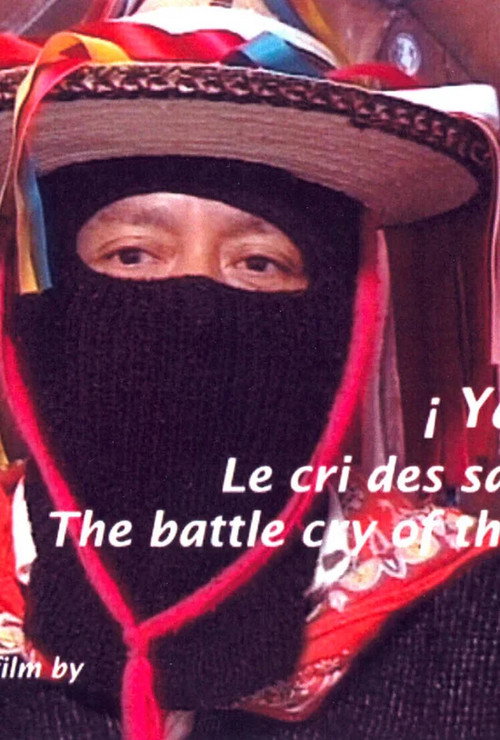
¡Ya Basta! Le cri des sans-visage 1997
Dive into the compelling world of *¡Ya Basta! Le cri des sans-visage* (1997), Thierry Zéno's raw and urgent documentary that captures a pivotal moment in Mexican history.
Director: Thierry Zéno
Frequently Asked Questions
What is *¡Ya Basta! Le cri des sans-visage* (1997) about?
This documentary chronicles the Tzotzil tribe's fight for fundamental rights—land, housing, education, and autonomy—against the Mexican government. It's a visceral portrayal of resistance, blending protest footage with cultural commentary on what it means to demand justice when the system fails you.
Who directed *¡Ya Basta! Le cri des sans-visage*?
The film was directed by Thierry Zéno, a filmmaker known for his provocative and socially conscious documentaries that challenge authority and highlight marginalized voices.
Who stars in *¡Ya Basta! Le cri des sans-visage*?
The documentary features the members of the Tzotzil tribe as central figures, alongside cultural references to the 40 Molons Orchestra of Namur in the video-installation segments.
Is *¡Ya Basta! Le cri des sans-visage* (1997) worth watching?
As a 50-minute documentary, it punches well above its weight, offering a rare and unfiltered look at indigenous activism. While unrated on IMDb, its themes of resistance and social justice make it a compelling watch for those interested in political cinema or human rights narratives.
How long is *¡Ya Basta! Le cri des sans-visage*?
The runtime is 50 minutes.
¡Ya Basta! Le cri des sans-visage (1997): A Gripping Documentary on Indigenous Resistance
Dive into the compelling world of *¡Ya Basta! Le cri des sans-visage* (1997), Thierry Zéno's raw and urgent documentary that captures a pivotal moment in Mexican history. Set against the backdrop of indigenous resistance, the film follows the Tzotzil tribe as they rise up, not with violence alone, but with a fierce demand for justice—land rights, fair wages, education, and autonomy from a government that has long ignored their plight. The atmosphere is electric, blending the harsh realities of protest with the cultural richness of the Tzotzil people, their voices echoing a cry for dignity that resonates far beyond the screen.
Zéno's lens doesn't just document; it immerses, weaving in the haunting visuals of "40 Molons," a video installation inspired by the legendary 40 Molons Orchestra of Namur. The documentary becomes a mirror, reflecting the struggles of the oppressed while challenging viewers to confront uncomfortable truths about power, privilege, and the fight for freedom. Short but impactful at just 50 minutes, *¡Ya Basta!* is more than a film—it's a manifesto in motion, a testament to the unyielding spirit of those who refuse to be silenced.