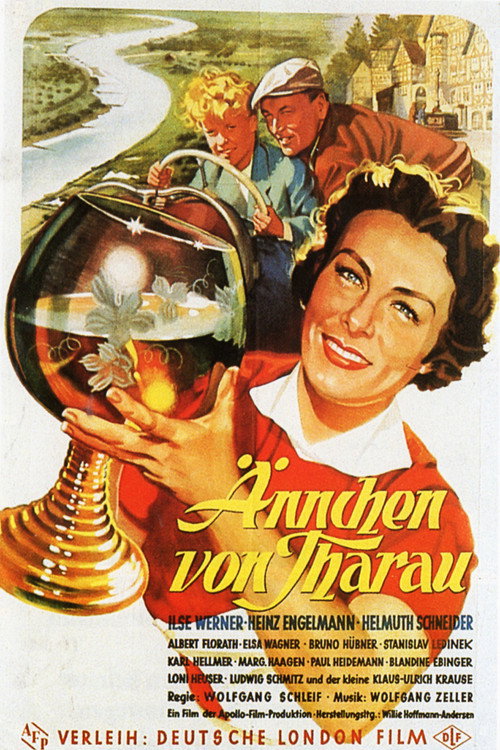
Ännchen von Tharau 1954
In the heart of post-war West Germany, a heartfelt romance unfolds in *Ännchen von Tharau (1954)*, directed by Wolfgang Schleif.
Director: Wolfgang Schleif
Cast






Frequently Asked Questions
What is Ännchen von Tharau (1954) about?
The film tells the story of Ännchen, a waitress who finds a new home in a West German wine town after escaping East Prussia. She cares for a young war orphan until his father unexpectedly returns, leading to a blossoming romance between them.
Who directed Ännchen von Tharau?
The film was directed by Wolfgang Schleif, a filmmaker known for his contributions to post-war German cinema.
Who stars in Ännchen von Tharau?
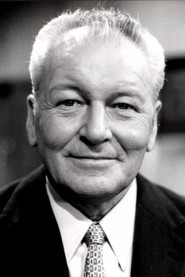
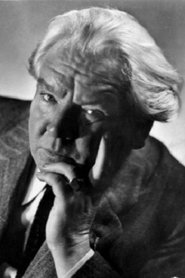
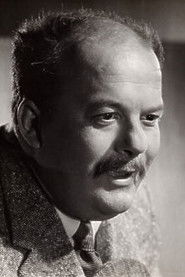
The main cast includes Ilse Werner, Heinz Engelmann, Albert Florath, Stanislav Ledinek, and Margarete Haagen, with Blandine Ebinger in a supporting role.
Is Ännchen von Tharau (1954) worth watching?
While it may not be widely known internationally, *Ännchen von Tharau* offers a charming and emotionally resonant post-war romance that fans of classic German cinema will likely enjoy. Its gentle storytelling and heartfelt performances make it a pleasant watch for those seeking a lighter, feel-good film.
How long is Ännchen von Tharau?
The runtime of *Ännchen von Tharau* is 96 minutes.
About Ännchen von Tharau (1954): A Post-War Romance in Full Detail
In the heart of post-war West Germany, a heartfelt romance unfolds in *Ännchen von Tharau (1954)*, directed by Wolfgang Schleif. The film follows Ännchen, a resourceful waitress who has built a new life in a picturesque wine town after fleeing her war-torn homeland in East Prussia. Her quiet existence takes an unexpected turn when she becomes the guardian of a young orphan, only for the boy's long-lost father to reappear and ignite a deep connection with her. As their bond grows, the story weaves together themes of resilience, second chances, and the healing power of love set against a backdrop of simple rural charm.
With its gentle pacing and tender moments, *Ännchen von Tharau* captures the bittersweet essence of rebuilding after disruption, blending nostalgia with the promise of new beginnings. The film's understated elegance, paired with Ilse Werner's warm and sympathetic portrayal of the titular character, makes it a standout in post-war German cinema. Audiences drawn to stories of quiet romance and emotional depth will find much to appreciate in this overlooked gem.