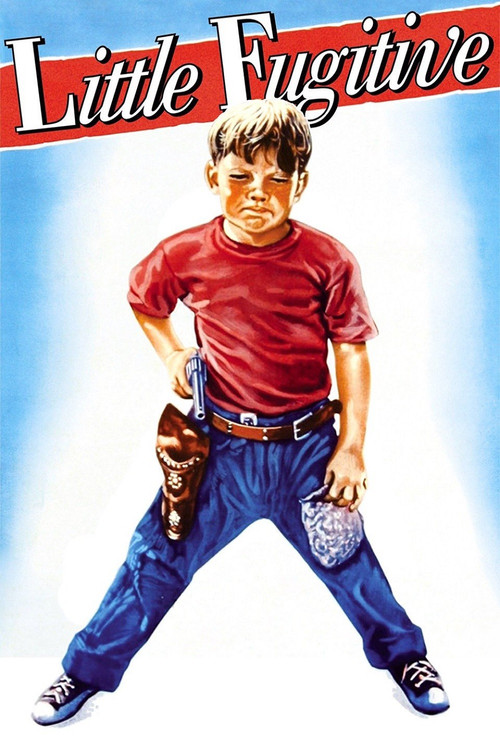
Little Fugitive 1953
"Morris Engel's All-American Classic"
Directed by Morris Engel, *Little Fugitive (1953)* is a poignant black-and-white drama that captures the raw emotions of childhood in mid-century America.
Director: Morris Engel
Cast
Frequently Asked Questions
What is *Little Fugitive (1953)* about?
*Little Fugitive* follows young Joey Norton, who, after a misguided prank makes him believe he's hurt his brother, runs away to Coney Island for a day of adventure. While he explores the bustling amusement park and beaches, his brother races against time to find him before their mother returns home.
Who directed *Little Fugitive*?
Morris Engel directed *Little Fugitive*, bringing a revolutionary documentary-style approach to narrative filmmaking.
Who stars in *Little Fugitive*?
The film stars Richie Andrusco as Joey Norton, Richard Brewster as his older brother, and Winifred Cushing as their mother, with Jay Williams and Will Lee rounding out the cast.
Is *Little Fugitive (1953)* worth watching?
Absolutely. This underrated classic blends heartfelt drama with the charm of 1950s Americana, offering a rare glimpse into childhood resilience. Engel's innovative techniques and the film's emotional core make it a standout for both casual viewers and film enthusiasts.
How long is *Little Fugitive*?
*Little Fugitive* runs for 80 minutes, offering a tight, immersive experience.
🎥 Trailer
About Little Fugitive (1953) — The Classic 1950s Film That Redefined Childhood on Screen
Directed by Morris Engel, *Little Fugitive (1953)* is a poignant black-and-white drama that captures the raw emotions of childhood in mid-century America. Starring Richie Andrusco as Joey Norton, the film follows a young boy who, after a cruel prank convinces him he's accidentally harmed his older brother, flees into the bustling chaos of Coney Island. For a single transformative day, Joey navigates the boardwalk, the ocean's edge, and the crowded streets, unaware that his frantic brother and worried mother are desperately searching for him. The story unfolds with a documentary-like realism, immersing viewers in a bygone era where innocence collides with harsh reality.
Engel's groundbreaking use of natural lighting and location shooting gives the film an intimate, almost voyeuristic quality, making Joey's adventure feel both timeless and deeply personal. As the sun sets on the amusement park and the city hums around him, the film explores themes of family, fear, and the courage it takes to face the unknown—culminating in a heartfelt resolution that lingers long after the credits roll.