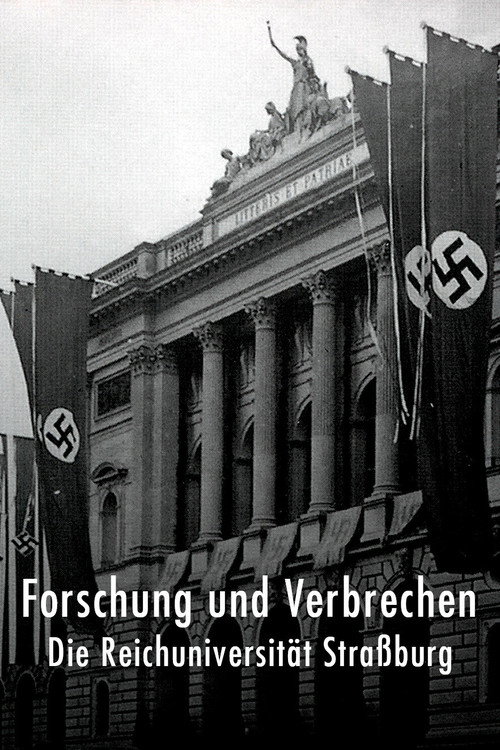
Research and Crime: the Reich University of Strasbourg 2018
Dive into the dark history of Strasbourg in *Research and Crime: the Reich University of Strasbourg (2018)*, a gripping documentary TV movie directed by Kirsten Esch.
Director: Kirsten Esch
Cast
Frequently Asked Questions
What is *Research and Crime: the Reich University of Strasbourg* (2018) about?
This documentary examines the dark history of the Reich University of Strasbourg, founded in 1941 under Nazi rule, where medical professors conducted horrific experiments on concentration camp prisoners. The film explores the role of its dean, Johannes Stein, and the legacy of complicity tied to this institution.
Who directed *Research and Crime: the Reich University of Strasbourg*?
The film was directed by Kirsten Esch, who also delves into her family's connection to the university's controversial past.
Who stars in *Research and Crime: the Reich University of Strasbourg*?
The documentary features Christiane Roßbach, Matthias Klie, Verena Rendtorff, Nele Haas, Rainer Möhler, and Christian Bonah among its key participants.
Is *Research and Crime: the Reich University of Strasbourg* (2018) worth watching?
As a documentary TV movie, it offers a gripping and sobering exploration of WWII-era medical crimes, grounded in historical research. While not a high-energy thriller, its unflinching look at institutional betrayal and human suffering makes it a compelling watch for history enthusiasts and those interested in ethical dilemmas.
How long is *Research and Crime: the Reich University of Strasbourg*?
The runtime of *Research and Crime: the Reich University of Strasbourg* is 54 minutes.
About Research and Crime: the Reich University of Strasbourg (2018) — A chilling look at medical crimes during WWII
Dive into the dark history of Strasbourg in *Research and Crime: the Reich University of Strasbourg (2018)*, a gripping documentary TV movie directed by Kirsten Esch. This harrowing exploration uncovers the sinister legacy of the Reich University of Strasbourg, one of three Nazi-founded institutions designed to serve Hitler's ideological ambitions. Established in 1941, this university became a site of unspeakable medical atrocities, as professors conducted horrific experiments on concentration camp prisoners. Through meticulous research and personal connection—Esch's own grandfather, Johannes Stein, served as its dean—the film peels back layers of complicity, guilt, and silence surrounding these crimes. The atmosphere is heavy with historical weight, blending archival footage, expert testimonies, and a haunting narrative that forces viewers to confront the chilling intersection of academia and atrocity.
With a runtime of just 54 minutes, this documentary doesn't just recount history—it interrogates it. Esch's film is a sobering reflection on the moral compromises of institutions under totalitarian regimes, posing uncomfortable questions about knowledge, responsibility, and the enduring scars of war. Featuring a cast that includes Christiane Roßbach, Matthias Klie, and Verena Rendtorff, the production balances scholarly rigor with emotional resonance, making it a must-watch for those interested in WWII history, medical ethics, and the hidden legacies of collaboration.