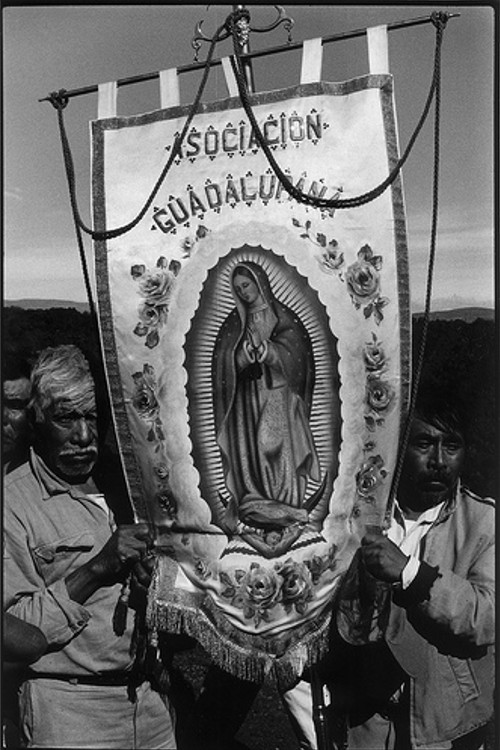
A Long Journey to Guadalupe 1996
Dive into the heart of Mexican identity with *A Long Journey to Guadalupe* (1996), a profound documentary directed by Juan Francisco Urrusti.
Director: Juan Francisco Urrusti
Frequently Asked Questions
What is A Long Journey to Guadalupe (1996) about?
This documentary examines the deep cultural and spiritual significance of Tonantzin-Guadalupe, the syncretic figure revered in Mexico since the 16th century. Through the voices of Indigenous people, mestizos, and Chicanos, it explores how this symbol has shaped Mexican values, politics, and collective memory over centuries.
Who directed A Long Journey to Guadalupe?
The film was directed by Juan Francisco Urrusti, a filmmaker known for his documentaries that bridge historical and contemporary Mexican life.
Who stars in A Long Journey to Guadalupe?
Director Juan Francisco Urrusti leads the film's narrative, while Indigenous elders, mestizo families, and Chicano activists share their testimonies as the heart of the documentary.
Is A Long Journey to Guadalupe (1996) worth watching?
Given its unique cultural depth and the rarity of films exploring this topic with such care, *A Long Journey to Guadalupe* is absolutely worth watching—especially for audiences interested in anthropology, religious studies, or Mexican history. The documentary's thematic richness outweighs its modest runtime, making it a rewarding experience.
How long is A Long Journey to Guadalupe?
The film runs for 98 minutes, or just over 1 hour and 38 minutes.
About A Long Journey to Guadalupe (1996) — Tracing Mexico's Sacred Bond with the Virgin
Dive into the heart of Mexican identity with *A Long Journey to Guadalupe* (1996), a profound documentary directed by Juan Francisco Urrusti. Over nearly a decade of filming, this 98-minute exploration captures the sacred syncretism of Tonantzin-Guadalupe, blending Indigenous traditions, colonial history, and modern Chicano perspectives. Shot in rich 16mm film, the documentary weaves intimate testimonies from Indigenous elders, mestizo voices, and diasporic Mexicans into a tapestry that reveals why the Virgin of Guadalupe remains a cornerstone of cultural and spiritual life in Mexico.
Urrusti's patient, observational approach transforms abstract theology into visceral storytelling, evoking the misty mountains of Tepeyac and the bustling streets where faith still pulses with indigenous roots. It's more than a film—it's a pilgrimage through time, ideology, and the unshakable power of symbolism in shaping nations.