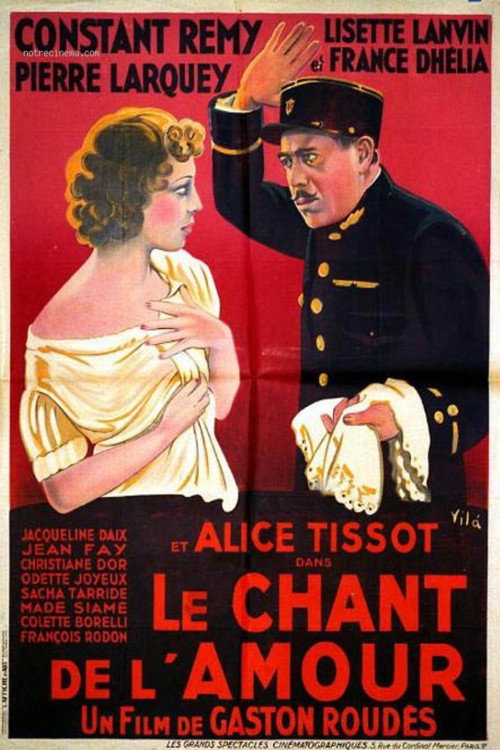
Le Chant de l'amour 1935
Set in a bustling Parisian apartment building in 1935, Gaston Roudès' *Le Chant de l'amour* weaves together the hopes and hardships of four lives seeking connection amid the city's simmering tensions.
Director: Gaston Roudès
Cast







Frequently Asked Questions
What is Le Chant de l'amour (1935) about?
This 1935 French drama unfolds in a single Parisian apartment building, where four residents navigate hardship and fleeting dreams of love. A struggling seamstress, a museum guard with careless daughters, an aging free spirit, and a teacher nursing her dying child each carry their own silent battles, all converging in a tale of resilience and unspoken longing.
Who directed Le Chant de l'amour?
The film was directed by Gaston Roudès, a noted French filmmaker known for blending social realism with emotional depth in his storytelling.
Who stars in Le Chant de l'amour?
The film features a talented ensemble cast including France Dhélia, Constant Rémy, Alice Tissot, Pierre Larquey, and Lisette Lanvin, each bringing the characters' struggles to life with nuanced performances.
Is Le Chant de l'amour (1935) worth watching?
Though not widely rated on IMDb, *Le Chant de l'amour* offers a captivating glimpse into 1930s French society, with a heartfelt story that balances drama and warmth. Its intimate scale and emotional honesty make it a compelling watch for fans of classic cinema with substance.
How long is Le Chant de l'amour?
The film runs for 84 minutes, offering a concise yet immersive viewing experience perfect for a single sitting.
About Le Chant de l'amour (1935) — Four lives under one roof, seeking love in a world of hardship
Set in a bustling Parisian apartment building in 1935, Gaston Roudès' *Le Chant de l'amour* weaves together the hopes and hardships of four lives seeking connection amid the city's simmering tensions. A seamstress trapped in a brothel's shadow, a museum guard watching his carefree daughters dance through life, a sharp-tongued elderly woman with a passion for love stories, and a devoted teacher watching her child waste away to tuberculosis—all share the same crumbling walls yet remain strangers to one another. Their dreams of romance flicker like candlelight in the dark, illuminating the fragility of human longing in a world where survival often eclipses sentiment.
This black-and-white gem of early French cinema blends comedy and drama with a bittersweet touch, capturing the era's social contrasts and the quiet resilience of ordinary people. The film's intimate setting and emotionally charged narrative make it a poignant snapshot of resilience and unspoken yearning, where every glance and sigh speaks volumes about the universal desire for love and dignity.