Ka-Ching! Pokie Nation 2016
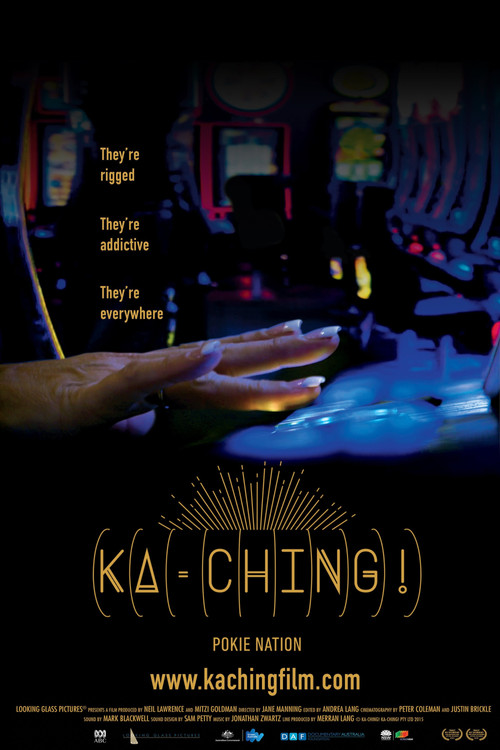
"They're rigged, they're addictive, they're everywhere."
Director Jane Manning's eye-opening documentary Ka-Ching! Pokie Nation (2016) pulls back the curtain on Australia's slot-machine epidemic with chilling precision.
Director: Jane Manning
Cast

Frequently Asked Questions
What is Ka-Ching! Pokie Nation (2016) about?
This investigative documentary exposes how poker machines are engineered to trigger addictive behavior, drawing parallels to opioid dependency. It also scrutinizes the role of successive Australian governments in normalizing and profiting from their widespread use.
Who directed Ka-Ching! Pokie Nation?
Jane Manning directed this eye-opening exposé, bringing a journalistic lens to the documentary's exploration of gaming machine psychology.
Who stars in Ka-Ching! Pokie Nation?
The film features insights from industry insiders, neuroscientists, and David Wenham as a key narrator.
Is Ka-Ching! Pokie Nation (2016) worth watching?
As a hard-hitting documentary, Ka-Ching! Pokie Nation delivers unsettling truths backed by expert testimony, making it compelling for fans of investigative cinema. Its concise 52-minute runtime keeps the momentum tight, though its bleak subject matter may not suit all viewers.
How long is Ka-Ching! Pokie Nation?
The documentary runs for 52 minutes.
🎥 Trailer
Ka-Ching! Pokie Nation (2016): A Shocking Look at Australia's Slot-Machine Crisis
Director Jane Manning's eye-opening documentary Ka-Ching! Pokie Nation (2016) pulls back the curtain on Australia's slot-machine epidemic with chilling precision. Through candid interviews with former industry insiders, neuroscientists, and critics, the film uncovers how pokie machines are engineered to hijack the brain's reward pathways, earning comparisons to 'electronic morphine' in clinical circles. The atmosphere oscillates between clinical dissection and mounting outrage as it traces the symbiotic relationship between politicians and poker machines—arguing that governments have profited from, and thus perpetuated, the cycle of addiction. Shot in clinical labs and under the neon glow of gaming floors, the 52-minute exposé blends hard data with human stories, leaving viewers questioning the true cost of convenience.
Ka-Ching! Pokie Nation (2016) challenges audiences to confront the ubiquity of these machines in everyday life, framing pokies not just as entertainment but as a public-health menace woven into the fabric of modern society. With a tone both investigative and urgent, Manning's film serves as a wake-up call wrapped in stark revelations, urging a reevaluation of the social contract between citizens and the machines designed to extract from them.