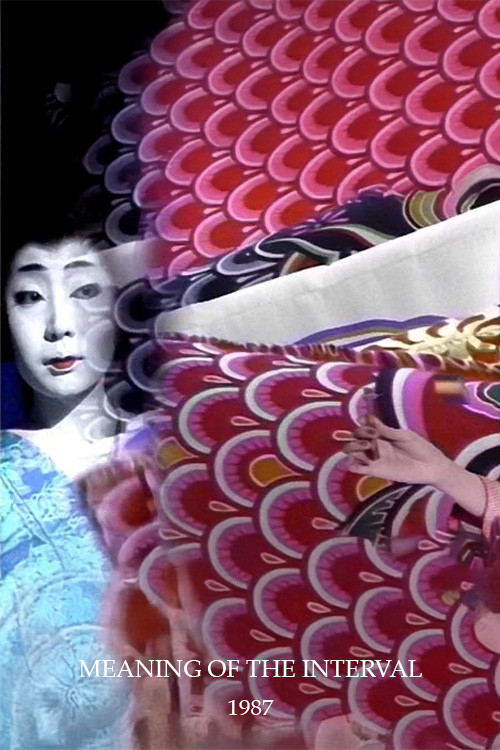
Meaning of the Interval 1987
In *Meaning of the Interval* (1987), filmmaker Edín Vélez crafts a hypnotic visual meditation on Japan's delicate dance between ancient traditions and rapid modernization.
Director: Edin Velez
Frequently Asked Questions
What is *Meaning of the Interval* (1987) about?
*Meaning of the Interval* is a lyrical exploration of Japan's cultural duality, weaving together scenes of ancient rituals and modern life to uncover the invisible threads that hold them together. The film centers on the Japanese concept of *ma*—the charged intervals between moments that define rhythm, meaning, and balance in society.
Who directed *Meaning of the Interval*?
Edín Vélez directed *Meaning of the Interval* (1987), an experimental documentary that blends visual poetry with cultural insight.
Who stars in *Meaning of the Interval*?
Director Edín Vélez brings together a tapestry of Japanese cultural figures and scenes, though the film focuses more on cultural moments than individual stars.
Is *Meaning of the Interval* (1987) worth watching?
While it's a niche experimental documentary, *Meaning of the Interval* offers a unique and meditative experience for viewers drawn to visual storytelling and cultural depth. Its brevity and abstract approach make it a quick but thought-provoking watch for fans of avant-garde cinema.
How long is *Meaning of the Interval*?
*Meaning of the Interval* (1987) has a runtime of 18 minutes.
About Meaning of the Interval (1987) — Edín Vélez's poetic study of Japan's cultural pulse
In *Meaning of the Interval* (1987), filmmaker Edín Vélez crafts a hypnotic visual meditation on Japan's delicate dance between ancient traditions and rapid modernization. Over the course of a year, Vélez captured a striking contrast of imagery—silent Shinto rituals unfolding alongside the relentless hum of bullet trains, the disciplined grace of Sumo wrestlers set against the sterile precision of corporate office towers. The film doesn't just observe; it immerses viewers in the Japanese concept of *ma*—the invisible space between moments, sounds, and actions that breathes life into rhythm and meaning. Through a collage of nonlinear, layered visuals, Vélez invites audiences to feel the pulse of a culture suspended in transition.
This experimental documentary feels less like a documentary and more like a sensory poem, where each frame whispers secrets about balance, harmony, and the unseen forces that shape identity. Whether it's the slow, deliberate movements of Kabuki theater or the fleeting glances in a Tokyo subway, *Meaning of the Interval* (1987) transforms the ordinary into the extraordinary, revealing how tradition and modernity coexist in the quiet gaps between.