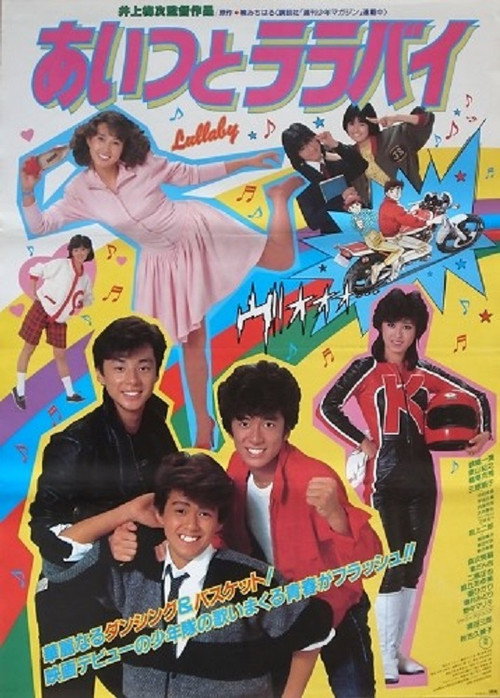
Aitsu to lullaby 1983
Step into the bittersweet world of 1983's *Aitsu to lullaby*, a delicate romance-drama directed by Umetsugu Inoue that lingers like a fading melody. This understated gem follows two souls navigating love and loneliness, their fragile connection tested by life's quiet storms.
Director: Umetsugu Inoue
Cast


Frequently Asked Questions
What is Aitsu to lullaby (1983) about?
The film traces the quiet, unsteady bond between two people whose paths cross during a period of personal turmoil. Their relationship unfolds like a slow dance, marked by hesitation and fleeting warmth against the backdrop of life's unpredictability.
Who directed Aitsu to lullaby?
Umetsugu Inoue, a director known for blending romance with social realism, helmed this intimate 1983 drama.
Who stars in Aitsu to lullaby?
The film features Kazukiyo Nishikiori, Noriyuki Higashiyama, and Katsuhide Uekusa in the lead roles, with Kumiko Akiyoshi and Junko Mihara adding depth to the ensemble.
Is Aitsu to lullaby (1983) worth watching?
If you appreciate slow-burn romances with emotional depth and a touch of melancholy, *Aitsu to lullaby* delivers. While it lacks mainstream recognition, its intimate storytelling and strong performances make it a hidden gem worth discovering.
How long is Aitsu to lullaby?
The film runs for 84 minutes, making it a concise yet impactful viewing experience.
About Aitsu to lullaby (1983) — A Fragile Romance That Echoes Like a Lullaby
Step into the bittersweet world of 1983's *Aitsu to lullaby*, a delicate romance-drama directed by Umetsugu Inoue that lingers like a fading melody. This understated gem follows two souls navigating love and loneliness, their fragile connection tested by life's quiet storms. With a runtime of just 84 minutes, the film unfolds in intimate moments—shared glances, whispered confessions, and the unspoken ache of growing apart. Kazukiyo Nishikiori and Noriyuki Higashiyama anchor the story with performances that crackle with raw emotion, while Kumiko Akiyoshi lends gravitas as the voice of reason in a sea of uncertainty.
As the title suggests, this isn't just a love story; it's a lullaby for the broken-hearted, a tender reflection on second chances and the music of everyday resilience. Shot through with melancholy yet spiked with hope, *Aitsu to lullaby* (1983) captures the essence of 1980s Japanese cinema: small-scale dramas with enormous emotional weight.