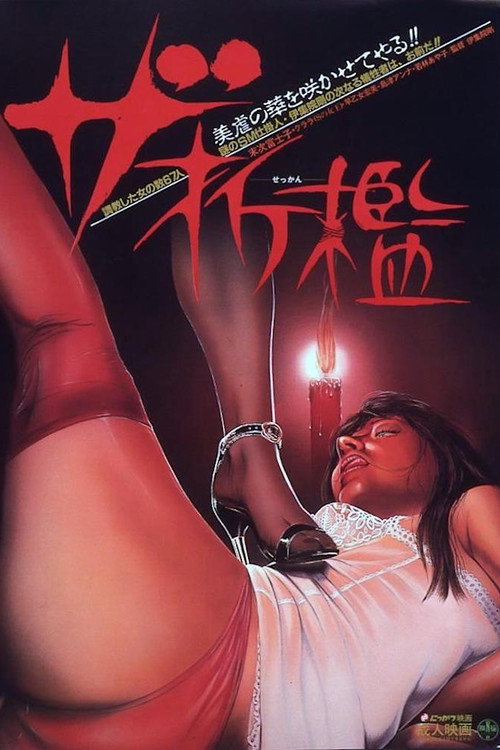
Za Sekkan 1985
"I will make the flower of beauty bloom! 67 women have been trained - you are the next victim of Gô Ijuuin!"
Za Sekkan (1985) is a controversial Japanese horror film directed by Gô Ijuuin that explores dark themes of spiritual liberation through extreme physical experiences.
Director: Gô Ijuuin
Cast


Frequently Asked Questions
What is Za Sekkan (1985) about?
The film follows director Gô Ijuuin's experimental journey to find a modern form of love through extreme physical punishment and bondage, exploring themes of spiritual liberation in a disturbing horror context.
Who directed Za Sekkan?
The film was directed by Gô Ijuuin, who also appears to be the central figure in this semi-documentary approach to horror filmmaking.
Who stars in Za Sekkan?
The cast includes Fujiko Suetsugu, Kurara, Hiromi Saotome, Anna Shimazu, and Shikô Shima in leading roles.
Is Za Sekkan (1985) worth watching?
As an unrated horror film with unique thematic elements, it may appeal to viewers interested in extreme Japanese cinema, though its disturbing content makes it suitable only for mature audiences seeking unconventional horror experiences.
How long is Za Sekkan?
The film has a runtime of 66 minutes.
Za Sekkan (1985) — Japanese Horror Meets Extreme Spiritual Experiment
Za Sekkan (1985) is a controversial Japanese horror film directed by Gô Ijuuin that explores dark themes of spiritual liberation through extreme physical experiences. This unsettling semi-documentary follows Ijuin's unconventional quest to discover a new form of love for the modern era, using methods that blur the line between punishment and enlightenment. The film's atmosphere is deliberately disturbing, creating an uncomfortable viewing experience that challenges conventional boundaries.
Starring Fujiko Suetsugu, Kurara, Hiromi Saotome, Anna Shimazu, and Shikô Shima, the movie presents a chilling exploration of human psychology under extreme conditions. With its 66-minute runtime, Za Sekkan (1985) delivers a concentrated dose of psychological horror that stays with viewers long after the credits roll. The film's unique approach to horror elements makes it a standout entry in 1980s Japanese cinema.