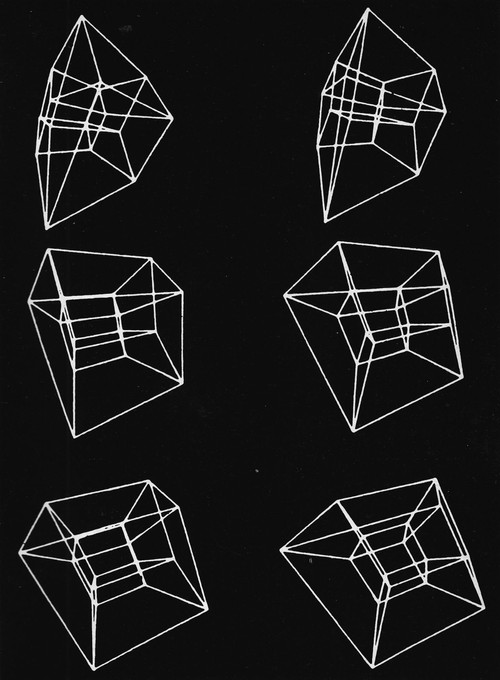
Hypercube 1965
Hypercube (1965) is a groundbreaking animated short by A. Michael Noll, blending geometric abstraction with early digital artistry.
Director: A. Michael Noll
Frequently Asked Questions
What is Hypercube (1965) about?
Hypercube is an experimental animated short that transforms simple geometric shapes into a dynamic exploration of light, shadow, and mathematical patterns. The film uses early computer algorithms to generate a mesmerizing visual dance of cubes, blurring the line between art and science.
Who directed Hypercube?
Hypercube was directed by A. Michael Noll, a visionary in the field of computer art and digital media.
Who stars in Hypercube?
Director A. Michael Noll is the primary creative force behind Hypercube, though the film is an abstract visual work without traditional cast members.
Is Hypercube (1965) worth watching?
While Hypercube is a niche experimental film, it holds significant historical value as one of the earliest examples of computer-generated animation. Its artistic innovation and short runtime make it a quick but intriguing watch for fans of digital art or avant-garde cinema.
How long is Hypercube?
Hypercube has a runtime of 2 minutes.
Hypercube (1965): The Birth of Digital Art in a 2-Minute Masterpiece — Full Film Info
Hypercube (1965) is a groundbreaking animated short by A. Michael Noll, blending geometric abstraction with early digital artistry. Clocking in at just two minutes, this experimental film transforms simple cubes into a hypnotic dance of light and shadow, exploring the interplay between mathematics and visual perception. Noll, a pioneer in computer art, crafts a mesmerizing visual experience that feels both clinical and poetic, inviting viewers to reconsider the boundaries between structure and chaos. The film's minimalist approach contrasts sharply with its complex underlying algorithms, creating an atmosphere that is both scientific and surreal.
Hypercube stands as a testament to the creative potential of early computer-generated imagery, long before digital art became mainstream. Its concise runtime belies its ambitious exploration of higher-dimensional space projected onto a two-dimensional plane, offering a glimpse into the future of visual storytelling. The film's unique aesthetic and conceptual depth make it a fascinating artifact of mid-20th-century innovation, appealing to both art historians and fans of experimental cinema.