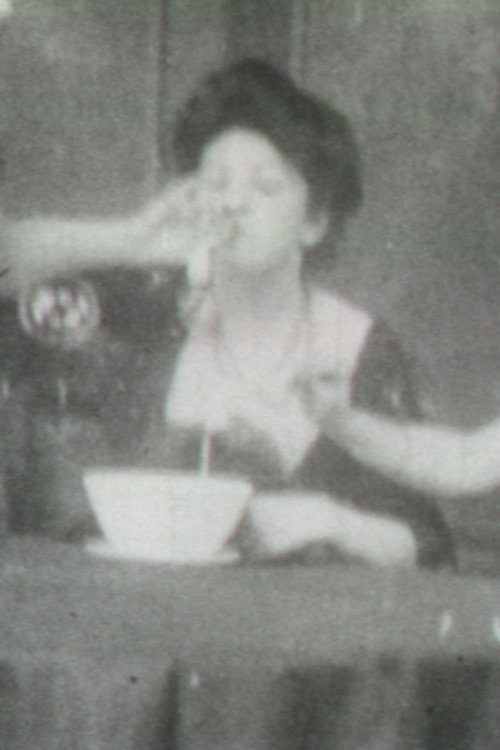
Public Domain 1972
Hollis Frampton's *Public Domain* (1972) is a hypnotic, experimental short that revisits the earliest days of cinema through a collage of meticulously reconstructed silent-era footage.
Director: Hollis Frampton
Frequently Asked Questions
What is Public Domain (1972) about?
*Public Domain* (1972) blends archival film techniques with everyday moments to explore cinema's origins. Hollis Frampton reimagines silent-era classics alongside candid scenes, transforming them into a poetic reflection on motion, memory, and the medium's early illusions.
Who directed Public Domain?
Hollis Frampton, the avant-garde filmmaker and theorist, directed *Public Domain*. Known for pushing cinematic boundaries, Frampton's work often merges history with experimental storytelling.
Who stars in Public Domain?
The film features unnamed performers from early Edison kinetoscopic shorts, including children and adults reenacting scenes like a newborn's weigh-in and a beachside tantrum.
Is Public Domain (1972) worth watching?
*Public Domain* is a niche but rewarding watch for fans of experimental cinema. Its 14-minute runtime and historical depth make it a fascinating time capsule, though its abstract nature may not appeal to all audiences. If you appreciate pioneering filmmakers like Brakhage or Warhol, this short is essential viewing.
How long is Public Domain?
*Public Domain* runs for 14 minutes.
Public Domain: Hollis Frampton's Experimental Homage to Early Cinema — Full Movie Info
Hollis Frampton's *Public Domain* (1972) is a hypnotic, experimental short that revisits the earliest days of cinema through a collage of meticulously reconstructed silent-era footage. The film stitches together iconic Edison kinetoscopic shorts like *Record of a Sneeze* (1894) and *Sandow Flexing His Muscles* with seemingly mundane yet strangely mesmerizing scenes—children playing at the shore, a baby's dramatic first weigh-in, a tantrum caught on camera. Frampton's work isn't just a homage; it's a meditation on motion, time, and the fragile boundary between art and documentation.
Captured in stark black-and-white, the film's atmosphere oscillates between nostalgic wonder and eerie detachment, as if peering through a window into the birth of an art form. Themes of innocence, performance, and the unspoken drama of everyday moments emerge organically, leaving viewers to question how much of cinema's magic was ever truly in plain sight. With its concise 14-minute runtime, *Public Domain* packs a punch for cinephiles and casual observers alike.