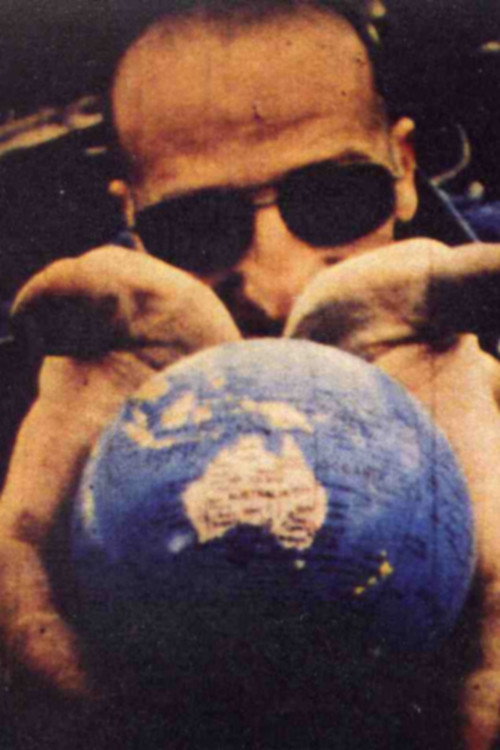
All That Is Solid 1988
"The present is characterized by the absence of shared visions of the future. While circulation of commodities and technology appear to command universal claims to meaning and dominance, fragmentation, diversity and difference occupy the foreground."
John Hughes' *All That Is Solid (1988)* dives into Australia's shifting cultural and economic landscape at a pivotal moment.
Director: John Hughes
Cast
Frequently Asked Questions
What is All That Is Solid (1988) about?
John Hughes' documentary examines Australia's cultural and economic shifts in the late 20th century, blending philosophy and visual storytelling to explore the tension between progress and fragmentation. The film questions how post-industrial forces reshape national identity while reflecting on the legacy of modernity.
Who directed All That Is Solid?
All That Is Solid was directed by John Hughes, an Australian filmmaker known for his insightful and often experimental approach to documentary.
Who stars in All That Is Solid?
The documentary features Margaret Cameron, Paul Davies, and Nicos Lathouris as central figures in its exploration of Australia's evolving identity.
Is All That Is Solid (1988) worth watching?
While unrated on IMDb, this 54-minute documentary offers a unique and thought-provoking perspective on Australian society. Its philosophical themes and Hughes' distinctive style make it a compelling watch for fans of essay films and historical introspection.
How long is All That Is Solid?
All That Is Solid runs for 54 minutes.
About All That Is Solid (1988) — John Hughes' Philosophical Take on Australia's Changing Landscape
John Hughes' *All That Is Solid (1988)* dives into Australia's shifting cultural and economic landscape at a pivotal moment. Commissioned during the Bicentennial year, this thought-provoking documentary blends essayistic reflection with visual poetry, questioning what the future holds in a world reshaped by post-industrial forces. Drawing on Walter Benjamin's haunting metaphor of the "angel of history" and Marx's idealistic vision of modernity, Hughes crafts a melancholic yet incisive meditation on progress and decay. The film's stark black-and-white aesthetic and fragmented narrative mirror the era's uncertainty, where shared dreams seem to dissolve amid the relentless march of commodities and technology.
Margaret Cameron, Paul Davies, and Nicos Lathouris lend gravitas to Hughes' exploration of national identity and societal fracture. As a speculative documentary, it resists easy answers, instead inviting viewers to ponder the ruins of the past and the shadows they cast on the present. With its introspective tone and philosophical depth, this 54-minute film offers a unique lens on Australian society—one that feels as relevant today as it did in 1988.