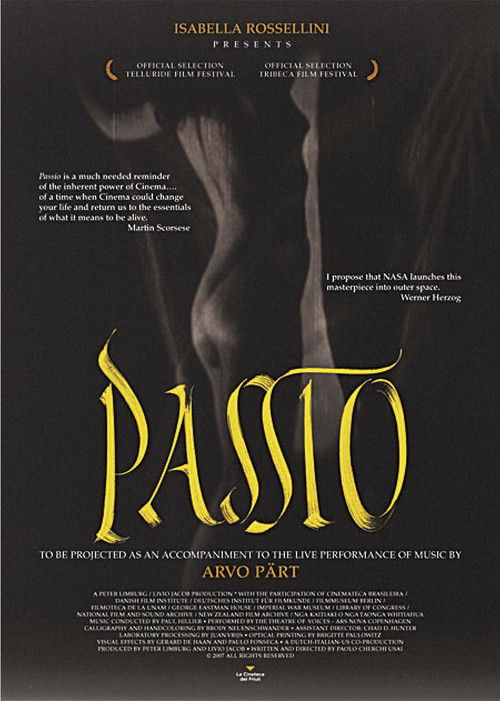
Passio 2007
Paolo Cherchi Usai's *Passio (2007)* blends music and visual storytelling into a mesmerizing, experimental meditation on faith and art.
Director: Paolo Cherchi Usai
Frequently Asked Questions
What is Passio (2007) about?
*Passio* is an experimental short film that merges music with religious imagery to craft a unique cinematic experience. Rather than following a linear narrative, it unfolds as a series of evocative visual and auditory moments, inviting viewers to explore themes of faith and artistry through its abstract lens.
Who directed Passio?
Paolo Cherchi Usai directed *Passio (2007)*. Known for his innovative approach to film preservation and experimental cinema, Usai crafts a visually rich and thought-provoking work.
Who stars in Passio?
Cast details for *Passio* are not publicly available.
Is Passio (2007) worth watching?
While *Passio* may not appeal to everyone due to its experimental nature, it holds significant value for fans of arthouse and avant-garde cinema. Its blend of music and religious imagery creates a unique atmosphere that rewards patient viewers.
How long is Passio?
*Passio* runs for 74 minutes.
About Passio (2007) — Experimental Short Film by Paolo Cherchi Usai
Paolo Cherchi Usai's *Passio (2007)* blends music and visual storytelling into a mesmerizing, experimental meditation on faith and art. This 74-minute short film unfolds as a surreal tapestry of religious imagery, where sacred motifs collide with avant-garde techniques to create a hauntingly poetic experience. The director weaves together soundscapes and striking visuals, evoking the emotional and spiritual weight of its subject matter while challenging conventional narrative structure. A dreamlike atmosphere permeates the film, making it feel both timeless and deeply personal, as if each frame holds a fragment of a larger, unseen story.
For fans of arthouse cinema and unconventional filmmaking, *Passio* offers a glimpse into the intersection of music and spirituality. Its abstract approach invites viewers to interpret its layers of meaning, whether through the lens of religious symbolism or purely aesthetic appreciation. The film's experimental nature ensures it stands apart from traditional cinema, appealing to those who crave something visually and intellectually stimulating.